


- Reasons for Burner Failure in Commercial Spaces
- Routine Cleaning
- Clean the Coil Channels
- Inspect the Ceramic Trough
- Check the Ventilation Openings
- Heating Element Replacement: When and the Process
- Expected Lifespan
- Replacement Frequency Schedule
- How to Replace a Heating Element
- Summary of the Preventive Maintenance Schedule
- Using Water to Cool the Burner
- Overloading the Heating Surface
- Using Abrasive Cleaners
- Ignoring Unusual Sounds or Smells
- Best practices for storage and rotation
- 結論
Ahmed has overseen the maintenance team at Al-Nour Lounge, Dubai, for four years. His station has six electric char水ギセルの炭 burners that burn through 60-80 coal rounds each per night. Before, he would replace at least one burner every three months. Now, with a properly organized practice, t水ギセルのホース burners have been in service for over a year and witnessed no failures. The difference was not buying more expensive tools. It was knowing how to care for the ones he already possessed.
Ahmed’s is not the only success story. Electric 水ギセル用炭 burners, used in lounges, are treated as disposable appliances. They burn for 8 to 12 hours a day, unattended, and filthy with ash and carbon dust. In such conditions, a burner that could serve a user for three years, would fail the user in six months due to poor maintenance practices. Yet, with proper maintenance practices, the service life of every burner in your lounge can be tripled or doubled, at the least. These practices include daily cleaning and proper storage, replacement of the heating element on time, etc.
This manual has everything your maintenance employees need to know for upkeep on commercial charcoal burners. We explain the day to day maintenance, weekly intensive cleaning, heater element replacement timing, common issues, and preventative measures.
Reasons for Burner Failure in Commercial Spaces
Due to the need for WIP maintenance and the nature of busy public spaces, understanding the reasons for failures is the first step to prevention. Commercial charcoal burners are simple machines. With the application of electricity, the resistive element heats up which in turn heats the coals. The overall system function is simple, but the system environment is complex and wears certain components more quickly.
Heating Element Lifetime
Burners heat up to 700 °C. Coupled with the rapid cooling of room temperature, the heating elements are at risk for fail by fatigue. With every heating cycle, the nichrome wire expands and contracts. The wires eventually lose strength and form microscopic rips due to the cyclical stress. The cracks form rips in the wire and decrease the overall resistance of the wire. The heating element will then fail, and the Commercial Charcoal Burner will be out of service until this element is replaced.
Carbon and Ash Accumulation
The ash and carbon dust produced during the charcoal burning process accumulates on every surface around the burner including the heating plate, coil channels, vent openings, and the interior housing. This Toast layer of debris acts like an insulator and keeps the heating element from radiating heat towards the coal and instead gets trapped. The element has to work harder and run hotter to achieve the same performance for lighting the coal. The excess heat speeds up the process of thermal fatigue. Additionally, the buildup can create hot spots that burn through the element before it’s expected.
Burner burns
In a fast-moving lounge, burners are often bumped, knocked and moved. Staff place heavy coal bags on them. Coals are forcefully released onto the heating surface. The heating element and its ceramic support tray are brittle. A single hard touch can crack the ceramic or deform the coil, causing an uneven heating surface that burns out the element within weeks.
Burner’s Stress
The majority of professional burners use between 1,200 and 1,800 watts. Plugging two burner’s into the same line or sharing a line with refrigerators, ice machines or sound systems causes drops and spikes in voltage. These fluctuations cause electrical stress on the heating element and the internal wiring, causing the element to burn at the connection before the coil.
Routine Cleaning

Routine Cleaning
The easiest and most efficient way to extend the life of the burners is to clean it after every shift. Five minutes of daily maintenance eliminates 90% of the carbon buildup that leads to premature element failure.
Step 1: Cool Down Safely
Batteries need to be given a bit of a break. You need to shut the battery off and remove the contact terminals. Your burner plate needs time for the materials and the surrounding air to reach a balance of 25-30 degrees C as well. Water needs to be avoided at all costs. The bringing of water to a high temperature and the sudden cooling ruins the insulator. The heating element will shatter. This is the most typical type of FAILURE of many burners and it is completely avoidable.
Step 2: Empty the Ash Tray
Most of the time a tray will be left made of a lightweight metal as a waste bin to hold the ashes from a heating element. Slide it out and empty it. If the drawer is not meant to be removed or is non-removable then use a special brush or air to push the ashes built at the edge inward. They can then be removed with a vacuum.
Step 3: Brush the Heating Surface
You will want to use a stiff bristle brush to remove ashes and soften the Heating Plate. It is recommended to sweep circular motions towards the edge. The dust can be removed from inside a coil as well. You want to be sure to clean out every dust accumulation.
Step 4: Clean the Outer Surface
Wipe control dials and switches, the power cord, and the outer surface of the unit with a cloth that is slightly wet. Take care that no moisture seeps into the control panel or the vent openings. The exterior of the burner will likely have dried tobacco that traps heat against the housing and can cause the burner to overheat.
Step 5: Inspect the Power Cord and Plug
Inspect the power cord to ensure it is not frayed, melted, or cracked. Check the plug for burns or discolored spots. The plug and cord should be replaced immediately if they are damaged as they are a fire risk. Some burner models have a removable cord so you can replace the cord and plug while still having a functional burner.
For a lounge with four to six burners, these five steps take a little under an hour to complete at the end of a shift and can add years to the burners. Linkup Hookah has designed electric charcoal burners for hookahs that are easy to clean at the end of the shift with removable trays to collect the ash.
Once a week a cleaning cycle that is more thorough should be incorporated into the regular maintenance schedule. This will ensure hard to reach places that are often neglected are taken care of.
Remove the Heating Plate
If your burner has a removable heating plate, remove it. Clean the heating plate using a dry cloth and brush. Inspect the heating plate for early signs of failure, like cracking, warping, or discoloration. If you’re noticing these signs, it will soon be unable to transfer heat and will require replacement.
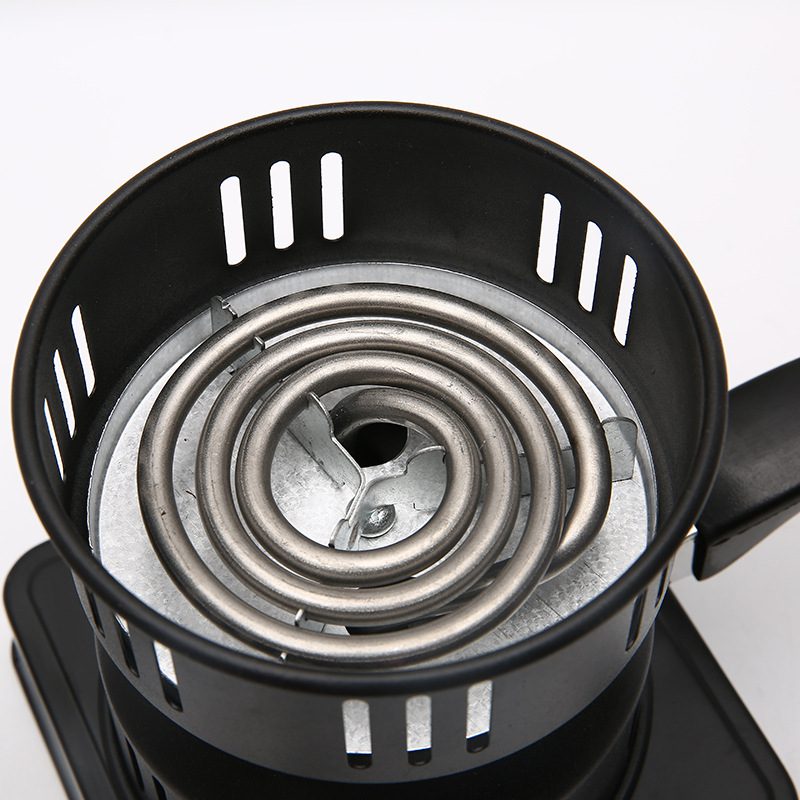
Clean the Coil Channels
The heating coils sit in channels that need to be cleaned of carbon dust. Use compressed air to remove carbon dust using an electronics duster or a low pressure air compressor. If you don’t have compressed air, thoroughly clean the channels using a brush.
Inspect the Ceramic Trough
Thermal cycling may lead to hairline cracking of the insulator. If the insulator is cracked, it will no longer insulate, and this will lead to thermal runaway of the heating coil. This will also lead to further degradation of the burner. Due to this, the burner will be inoperable in the next few weeks.
Check the Ventilation Openings
Ventilation openings may be located at the the bottom or on the sides of the burner. If they become obstructed, it will lead to the burner overheating. Use a vacuum to remove debris from the openings. If the burner is operated with the openings obstructed, the internal temperatures may lead to melting of the burner wiring.
Heating Element Replacement: When and the Process
The heating element takes the heaviest load of all components of a charcoal burner and the most replaceable. Recognizing the replacement schedule and keeping spare elements on hand can mean the difference between a five-minute repair or the purchase of an entirely new burner.
Expected Lifespan
Using a nichrome heating element within the “normal commercial” threshold of six to ten hours of daily burner operation, per week, five to six days, the element tends to last six to twelve months. Elements that are thicker, of the high grade, and of better oxidation resistance, can last up to eighteen months. The elements of cheaper quality are likely to last, at a maximum, three months.
The lifespan of the elements mentioned assume proper cleaning of the burner and an adequate level of airflow. A burner that is not cleaned daily can expect element life to be reduced by 40% to 60% of the expected range.
Signals of the Element Needing Replacement
Train your employees to be able to recognize and understand the following:
- – Lengthy ignition times
- – Coals that are not evenly lit
- – Less heating wire that is even in color
- – Coils that sag or touch the plate
- – A smoky burning smell that emits from the burner
- – The burner trips the circuit
- – The heating wire has gaps or breaks
Taking note of any of the evidence that was mentioned would indicate that the burner element would likely need an immediate replacement. Operating a heating element with these signs of damage puts additional stress on the switch, plug, and wiring, and also increases the risk of a fire.
Replacement Frequency Schedule
Instead of waiting for elements to break, implement a replacement frequency schedule. Here is a rough guideline for commercial lounges:
- – High-volume burners (20+ coal rounds per night): Replace element every 6 months
- – Medium-volume burners (10–20 rounds per night): Replace element every 9 months
- – Low-volume burners (< 10 rounds per night): Replace element every 12 months
Write these dates on a maintenance calendar. To keep track of replacements, write the date on the burner housing with a permanent marker when you replace an element.
How to Replace a Heating Element
Most commercial burners can have their elements replaced in under ten minutes. The general process is as follows:
- – Unplug the burner and let it cool down completely
- – Take off the heating plate or grate
- – Unscrew or unclip the old element
- – Remove the ceramic insulator holding the element
- – Place the new element in the ceramic trough
- – Reconnect the terminals along with the heating plate
Always keep a spare element for each burner in your maintenance inventory. The replacement elements cost $15 to $40. A new burner costs $80 to $300, plus the potential loss of revenue from a burner failing in the middle of a shift.
When stocking up on spares, consider that your burners need quality accessories too. The Linkup Hookah collection of custom ステンレス製の水タバコ tongs represents a perfect example of quality accessories. Good quality tongs minimize the chances of coals being dropped on the heating element, the number one culprit of breaking the coil.
Summary of the Preventive Maintenance Schedule
This is the complete maintenance schedule to be followed by your staff. Please print it and stick it to the coal station.
DAILY
- – Unplug and cool down your unit.
- – Clean out the ash tray.
- – Brush the heating surface.
- – Wipe the exterior.
- – Check the plug and cord.
Every Week
- – Take out and examine the heating plate.
- – Clean coil channels with compressed air.
- – Look for cracks in the ceramic trough.
- – Clear ventilation openings.
- – Make sure terminal connections are tight.
Every Month
- – Measure the resistance of elements and compare this to manufacturer specs.
- – Inspect the cord for wear.
- – Check the breaker and outlet for heat damage.
- – Rotate burners if you have extras. Alternate which burners are used daily.
Every 6–12 Months
- – Follow the schedule for replacing heating elements. Never wait for a heating element to fail before replacing.
- – Follow the schedule for replacing power cords.
- – Thoroughly clean the inside.
- – Evaluate the cumulative use of the burners to determine if a full replacement of the burners is needed.
Burner Lifespan Reducing Mistakes to Watch for
There are a few mistakes to look out for to further reduce the lifespan on the burners. Make sure your staff is aware of the below mistakes.
Burner is Run Empty
Running a burner with no coals is a good way to destroy the heating elements. With no coals to absorb heat, the elements get too hot and oxidize. Always make sure you have coals on the burner, and turn the burner off before removing the coals.

Using Water to Cool the Burner
In a rush to clean, some workers pour water onto a burner to speed up the cooling process. This form of thermal shock damages the heating plate and cracks the ceramic insulator. While the burner can work afterwards, this concealed damage greatly reduces the lifespan of the burner. Lack of water on a hot burner is preferred. Air cooling is more appropriate.
Overloading the Heating Surface
Putting too many coals onto the plate puts stress on the plate on the element. It also leads to coals being trapped, making them unable to be lit, in addition to losing heat. It is best to follow the manufacturer’s recommendations concerning the total load on the heating element.
Using Abrasive Cleaners
Using steel wool, scouring pads, and aggressive chemical cleaners scratch the heating surface and the burner. Cleaning the burner surface can be done by using soft brushes, as well as dry cloths. Soap and water can be applied in a mild manner on the exterior. This can only done when the burner is cooled and cleaned.
Ignoring Unusual Sounds or Smells
Hissing insects the burner as a result of moisture in the element. Popping indicates loose connections. Smells like burning from igniting carbon dust or melting of the wires. Each one of these indicates that a burner should be further assessed and taken out of commission. Continuing to use the burner should not be the go to option. Immediate reporting should be followed.
Best practices for storage and rotation
Your multiple burner system can be optimized with a rotation system. Instead of running the same two burners every day and never using the others, set a weekly or monthly schedule to alternate every burner.
Burners that run every day breakdown faster. Burners that sit for long periods of time can have issues too. Dust absorbs humidity and when the burner is finally used it can cause a short circuit. A rotation system ensures the health of all the burners.
When a burner is no longer used, it should be stored in a clean, dry area. Dust the burner less often if it is wrapped in cloth or plastic. Before it is stored and unused, damage should be checked. It should also be tested before returned to the active rotation.
Repair or replace?
Some burner issues aren’t worth fixing. Here’s your practical decision framework:
If the housing, plate, supportive frame, and controls are in good condition, but the coil is broken or has hot spots, then only the element should be replaced, and the burner should be used.
If the ceramic trough, the control switch, or the housing are in poor condition, then the burner should be replaced. Generally, the price of a new burner is less than the cost of replacing the aforementioned components.
Replace the burner: The burner has been in daily service for more than three years. It has a risk of failure even if it is still usable. The internal wires and the internal components are damaged from years of heat. It’s best to shift it to backup status or recycle it.
With proper maintenance and usage, commercial charcoal burners last between two to three years of usage in a high-volume lounge and four to five years of usage in a medium-volume lounge. Linkup Hookah’s electric charcoal burner for Hookah users is built for easy maintenance with a design that allows for replacement of the components and accessibility for maintenance. This allows you to use the unit for its full lifespan.
結論
Ahmed at Al-Noor Lounge has even better maintenance than before. His team has created very strict protocols for daily and weekly cleaning. They’ve adopted a proactive element replacement schedule. They replace elements every six months instead of waiting for failure. They have a weekly rotation of their six burners, and their maintenance drawer, which is kept stocked at all times, is located next to the coal station and has backup elements, cords, and tongs.
In the last twelve months, none of their burners have failed during a shift. Their replacement spending has decreased by 70 percent. They now get close to two years of service from their previously low lifespan burners that used to only last three months.
Maintaining a commercial charcoal burner is quick and simple. Ten minutes at the end of a shift and a few planned replacements are all that’s required to operate your coal station reliably, time after time. Your team has more time to fulfill customers’ needs instead of working with faulty equipment. Your customers receive burnable coals, and your equipment is financially advantageous.
Build a maintenance culture that respects each burner’s value as a capital investment and supplement your station with maintenance tools, high-quality burners., and a reliable supplier. Your maintenance staff and your lounge will be grateful.