


- The Lounge That Nearly Collapsed
- Hardware Is An Asset. But Cheap Hardware Is A Liability.
- Where the Money Really Goes
- Calculating the Actual Numbers
- Supply Chain Hidden Costs
- Hoses and Mouthpieces: The Hygiene ROI
- Constructing a Lounge Kit That Maximizes ROI
- The Hard Currency of Stainless Steel
- Where Lounges Lose Revenue
- 結論
The Lounge That Nearly Collapsed
Two years ago, my friend opened a 水タバコセット lounge in a college town. It had a great location. The music was good. The lounge had a new and exciting vibe and the crowd was there every weekend.
He bought cheap hookahs. Twelve hookahs. He started with entry level aluminum stems that had a plastic hose port. Each hookah cost him under forty bucks at wholesale. This was really a good deal for him.
After half a year passed, five of those hookahs turned useless. There were complaints of air leaks. Regular customers chose to no longer frequent the lounge.
He had to buy new 水ギセルのボウルs every week, which were cost effective but would break easily during cleaning. The cheap 水ギセルの炭s that produced more ash than heat only added insult to injury. After eight months, all of the money lost due to equipment failure and wasted consumables added to over five thousand dollars. The hardware cost him three hundred dollars. He severely suffered a loss of seventeen times.
This is true for data across every city. Most of the owners do not understand.
Hardware Is An Asset. But Cheap Hardware Is A Liability.
In the shisha lounge equipment business, every hookah is more than a decoration. They are machines that bring in revenue.
Investing in a better hookah with a reputable brand saves money in the long run. The Moze Breeze Pro 2, at about 200.00, is a fraction of the cost when compared with cheap aluminum stems. The 304 stainless steel does not rust, the welds are strong and the finish holds up over time.
When you look at the total cost over its life, a cheap hookah can only take you 300 sessions. A premium one with stainless steel can take you over 3,000. While the premium one has a higher purchase price, it ends up being the better price per session. The cheap ones, on the other hand, are an economic loss every time you use them.
For a lounge that just wants to start right, models of Moze Breeze Pro2 (304 stainless steel) can be a great first purchase.
Most lounges run a setup of 12-30 hookahs per night. If each cheap stem only lasts 18 months, and each premium one lasts 5 years, the savings cover that gap in just 2 years. Everything after that is just profit.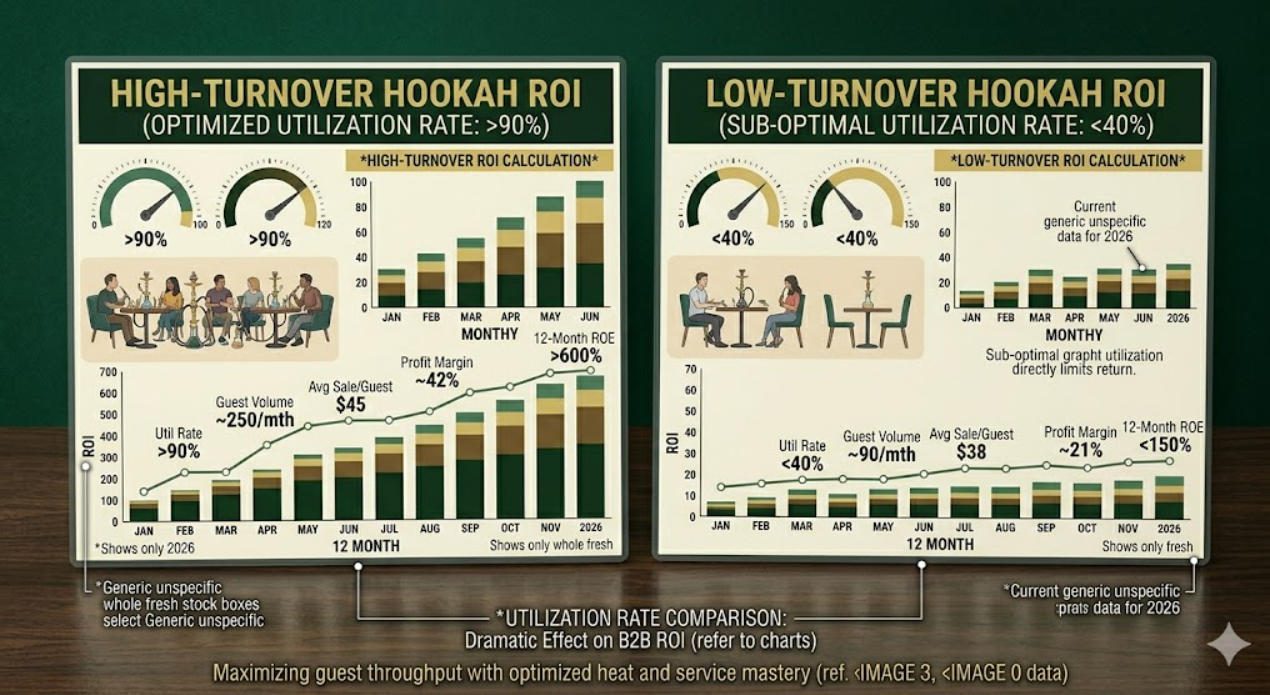
Where the Money Really Goes
Durable goods (like a hookah) are usually a one time cost. Hookah sessions consume goods that are perishable (like tobacco). These goods are forever a cost. Good quality inventory is needed to keep the lounge profitable. For a lounge that does 20 sessions in a night, they will go through 10 kilos of coal and a half kilo of tobacco. That perishable inventory will cost you a lot by the end of the year.
Most owners believe they cannot affect the cost of consumables, and treat consumables that way. This is incorrect. Making the right hardware choices can reduce cost and waste on consumables.
Consider heat management devices (HMDs). Cheap aluminum HMDs warp and uneven heat distribution. Employees end up putting more coals than needed. This may start at three coals, and eventually be as much as five. At the end of the year, how much wasted charcoal do warped HMDs collectively cost? A lounge can easily answer hundreds of dollars.
In comparison, an HMD made of machined aluminum alloy with a tight fit can retain the heat, and can burn less coals. It also improves the smoke quality. This leads to more satisfied customers and repeated orders.
Smoke tobacco also falls under this category. A cheap ファネルボウルガイド with inconsistent glazing burns unevenly. The top layer chars and the layer stays wet. Staff scrape out the half-burnt tobacco to repack it. This all leads to unnecessary waste. A bowl with a controlled heat retention can burn everything evenly. That means less tobacco and more sessions per kilogram. The bowl can be financially justified in two weeks.
Calculating the Actual Numbers
Let’s make a more realistic estimate for a mid-sized lounge.
Scenario B — Premium approach: Twelve stainless steel hookahs at $120 each ($1,440 total). Quality HMDs at $35 each ($420). Premium bowls at $18 each ($216). Replacement rate: one hookah and three bowls per year. The approximate cost for an annual hardware replacement: $80.
A premium setup is $1,500 more. It looks worse at first glance due to the annual replacement cost savings ($170). However, the more significant savings are in the consumables.
Premium HMDs save an average of one coal per session. Given that there are twenty sessions daily, that is a savings of twenty coals per shift. At the current wholesale rates for coals, that amount is a savings of roughly $15 for one shift of 300 daily operating days, leading to a savings of $4,500 per year.
Premium bowls reduce tobacco waste by 15%. A lounge that goes through 150 kg of tobacco per year at $25/kg sees a $562 reduction in costs per year due to the waste reduction.
In terms of hardware, the savings are $170 per year. In terms of total consumables, the savings add up to $5,062 per year. Each premium setup pays for itself in four months. After that time, the lounge gains everything that is saved.
These numbers are not aggressive. High volume lounges save even more.
The reduced water changes also come from a cleaner burning setup. The quality glazing used in the bowls means they will not craze or crack, reducing bowl replacements. Quality equipment also leads to sessions that are of a predictable duration and can be managed easily. Therefore, the savings are numerous.
Not every lounge needs the most expensive hardware, but the cheapest option is almost never the most profitable. In the shisha lounge equipment business, smart purchasing means understanding the total cost of ownership.
Supply Chain Hidden Costs
What happens after a product is purchased is typically what lounge owners think about. Rarely do lounge owners think about what occurs before a product is delivered.
Low cost hookahs are produced in factories that have poor quality control. One batch is assembled competently but the next batch may have loose or misaligned welds. Among the twelve hookahs that are ordered, three may arrive non-functional. The time consuming process of returning the defective hookahs and receiving replacements may stretch for two weeks, all while Saturdays are missing hookahs.
Quality brands establish consistent quality levels, unlike low cost hookahs. Moze, Steamulation, and Aeon hookahs pass quality inspections before leaving the factory and are built to last beyond the sale.
The reliability a cheap product lack includes something called a chaos tax. This tax manifests when the product purchased breaks at the worst possible time.
Hoses and Mouthpieces: The Hygiene ROI
Hoses are the most taken for granted consumable product in a lounge. They become a means for the spread of bacteria. Wrapped hoses build up biofilm, and can not be cleaned, so they are typically discarded after prolong use. This results in unsatisfactory consumer experiences, deterring customers from returning.
Silicone hoses can be quickly cleaned with a brush and hot water. Unlike fabric hoses, they do not maintain hose taste between uses. Quality silicone hoses cost more, but they last longer and provide a better quality smoke.
The same applies to mouth tips. Reusable tips cost more than disposable tips but are perceived to maintain a lounge’s quality and promote a business’s image.
Glass bases are beautiful but break. A busy lounge can lose a glass base per year due to tips, cracks, and smells. Each base replacement costs $15 to $30 and can take weeks to be replaced if it has a custom shape.
Thick-walled Borosilicate glass resists thermal shock, but standard glass better resists impact and thermal shock. It also stands up to a dishwasher and a bump from a customer’s elbow.
For acrylic, food-safe polycarbonate bases, they do not break. They also cut replacements to zero. The trade-off is clarity. Plastic scratches over time. Match the base material to your specific operating environment.
Constructing a Lounge Kit That Maximizes ROI
Stainless Steel is a Must
304 Stainless Steel is an industry standard for a very good reason. It won’t corrode. It won’t react with tobacco juices. It can be cleaned with hot water and a brush. No chemicals are needed. It can last between five and ten years in commercial use. It is the most cost-effective option over the long term.
Moze, Steamulation, MIG, and Aeon all use 304 stainless. The price difference for these brands compared to the cheap imports is actually very small. The performance difference, however, is substantial.
Heat Management is a Smart Investment
The HMD is the most impactful accessory in this kit. A good HMD saves coals and tobacco while enhancing the customer experience. The Kaloud Lotus III, and similar HMDs made of machined aluminum, are worth the investment.
Get a good quality bowl to go with your HMD. Phunnel-style bowls that are dense and consistently thick distribute heat evenly and prevent juice leaks. Do not use a hand-thrown bowl with a thickness that is inconsistent.
Smart Burning
Electric charcoal burners are one of the most worthwhile investments due to their cost savings. Gas burners lose heat to the air. Electric burners deliver consistent and controllable heat. They light coals faster and more evenly. They also eliminate the open-flame hazard in a commercial kitchen.
Check out the electric charcoal burners we offer.
Build a Rotation, Not a Collection
Buying all 12 hookah models is unnecessary. Instead, get 6 pairs of each model. Standard models for a table are built to reduce the time spent training staff and make replacement parts easy to source. Having consistency in the models used helps put the same experience on every table.
With consistency, your clients know exactly what to expect, and you will have clients coming back.
The Hard Currency of Stainless Steel
Those experienced in lounge equipment procurement know the value of investing in stainless steel. This is because value is retained with stainless steel.
A hookah that costs 25 dollars has no value after a year of use. On the other hand, a stainless steel hookah in the right condition holds its value between 60 – 70 dollars, and the hookah has been paid for. Consider the depreciation of hookahs just like you would a car. An economy car loses value the moment you purchase it, while a luxury car does not. The same logic applies to your hookahs. Quality products are a great purchase.
Lounge owners understand these principles, and their profits reflect this. Their supplies are of less consequence to their clients because of the intact equipment quality. Clients notice the quality, then spread the word, and the profits from the initial purchase become a smaller burden over time.
Where Lounges Lose Revenue
Making Purchases Solely Based On Aesthetics
There are hookahs that design specifically to be pretty for Instagram, as opposed to for actually being used and providing service. A hookah stem with a LED light show and a resin sculpt may look beautiful and provide decor for a hookah lounge, but they won’t serve the hookah and lounge well for long. The lights may burn out. The resin may crack. The hookah sculpt will retain moisture and breed mold. Always prioritize function before aesthetics.
Not Stocking Replacement Parts
A lounge with all 20 hookahs and no spare parts for any of them is a lounge waiting for business to die. Parts for hookahs wear and break and need replacement, and the costs to replace them for business purposes does not justify the costs incurred and the broken business as a result.
Not Training Employees
Even the best hookahs won’t serve a lounge well if they aren’t used with the best staff. Always gently handle hookah and clean them after use. Teach employees the best practices when packing a hookah bowl to optimize and evenly distribute heat when serving to guests. A single thirty-minute staff training on proper hookah use can ultimately save the business hundreds of dollars and a whole lot of broken hookahs.
結論
In the business of shisha lounges, the only question that patrons are making a real choice about is how much they are paying up front and how much they will have to pay in the future for funds wasted on cheap hookahs and other replacements. Investing in premium hookahs and other shisha lounge supplies and equipment saves a business funds in the long run and ensures that patrons receive shisha services that retain them.
The lounge that buys quality materials like stainless steel hookahs, HMDs and bowls, is spending wisely, not splurging. Savings are seen through customer retention and each session run.
Establish your resources looking to the future. Lengthen your inventory and your customers will appreciate it.
Every dollar spent retains quality. Less frequent emergency orders, reduced staff time dealing with broken equipment, and higher margins when waste is reduced and consistent quality is achieved.
The lounges that thrive after their first year do not have the best playlists or the most followers. The best operations rely on expensive quality equipment.