


Bringing Together Bowls, Hoses, and Stems into a Single Container
One container. Every SKU. One freight bill.
Shipping costs can account for 15 to 25 percent of total landed costs when your B2B juegos de narguile customers source from China. The single best way to reduce this cost is through consolidated hookah shipping. This means stuffing a 40HQ container with stems, bowls, hoses, coals, and accessories, instead of shipping them in a larger number of smaller shipments. This article provides details of how to design the load, protect the fragile sticks, and achieve maximum fill for every cubic meter. our hookah collection tubos para cachimbas
The 40HQ container’s available space for shipping is around 76 cubic meters (2.69 m internal height). When filled with an appropriate mix of hookah products, substantial savings are achieved when compared to splitting the shipment into multiple LCL (Less than Container Load) shipments. These include:
- The freight cost drops 40 to 55 percent per kg when compared with an LCL load, since the container cost is a flat rate.
- Avoid LCL consolidation fees and warehouse handling fees, as well as deconsolidation delays.
- Reduced burden of multiple customs clearances due to consolidation, and therefore reduced overall work for brokers along with improved savings in time.
A US lounge ordering materials such as 500 stems, 2,000 bowls, 3,000 hoses, and 1 ton of coconut coalss from a Linkup Hookah factory in China would have to pay approximately $4,200–$5,800 in LCL freight across four separate shipments. When these items are consolidated into a single dedicated container, that freight would cost approximately $2,800–$3,600. This consolidating system creates a $1,400–$2,200 savings for each procurement cycle.
The freight costs of each product in the consolidated system can be compared as follows:
| Producto | LCL Freight | FCL Freight (Consolidated) | Savings |
| 500 Stems | $1,200–$1,700 | $700–$900 | ~42 % |
| 2,000 Bowls | $1,400–$1,900 | $800–$1,100 | ~40 % |
| 3,000 Hoses | $800–$1,200 | $500–$700 | ~38 % |
| 1 Ton Charcoal | $800–$1,000 | $500–$600 | ~35 % |
| Accesorios | $200–$400 | $100–$200 | ~45 % |
| TOTAL | $4,400–$6,200 | $2,600–$3,500 | ~40–50 % |
There are additional savings beyond freight for a consolidated container. These include savings on customs brokerage charges which are due to only one customs entry (as opposed to four). There are savings due to reduced port handling fees and a comprehensive reduction of the total door-to-door transit time. This is due to the elimination of the consolidation and deconsolidation of the container which adds 5–10 days
Bowls: Light, Bulky, Fragile
Bowls are the most challenging item to pack in a consolidated hookah shipping container. Each bowl weighs between 80 and 200 grams, but their shape with deep cavities, thin walls, and glazed surfaces makes them take up more volume as compared to their weight. A carton containing 24 Guía sobre los cuencos «phunnel»s is about 0.04 cubic meters (m³) and only weighs 4 kg.
Bowls packaging strategies include the following:
- 1 bowl is to be wrapped in polyethylene bubble foam (5 mm thickness) about 2 – 3 times.
- The bowls are to be placed cavity-side down and are to be surrounded by crinkle-cut kraft paper.
- Layers of bowls are to be limited to 3 per carton (due to the bowls in the lower layers being exposed to crushing risks during transit).
- Corrugated boxes (5-ply (AB-flute)) with a burst strength of ≥ 200 lbs/in² are to be used.
- Bowls are to be clearly labeled as “FRAGILE — TOP LOAD ONLY — DO NOT STACK.”
Bowls should always be on the top of the container loading priority and should never have heavy items on their carton stacks.
Stems (Stainless Steel/Brass): Heavy, Compact, Durable
The stems of the consolidated hookah shipping container are especially useful. Their weights are between 1 kg and 3 kg, and their volume (35 – 60 cm and 2 – 4 cm in diameter) is relatively low, and they can withstand being crushed. A carton with 20 stems weighs 30 – 50 kg and only has a volume of about 0.06 m³.
Stems packaging strategies includes the following:
- 1 carton is to have 5 stems that are to be bundled together and individually paper wrapped to alleviate the risk of their surfaces being scratched.
- Put stems in high-strength RSC boxes (Regular Slotted Containers), separating stems with corrugated dividers.
- Use foam end-caps for threaded stems to prevent thread damage. Damaged threads result in returns and costly re-threading.
- Aim for an internal density of 400–600 kg/m³ for stems. Stem boxes are generally mid- to bottom-placed in the carton.
Hoses: Compressible, Flexible, Volume-Neutral
Hoses are the best way to maximize space within an optimized consolidated hookah shipping container. Standard silicone hoses shipped loose or in rigid tubing take up a lot of volume. The answer is vacuum compression, which minimizes hose volume by as much as 70%.
Packaging strategy for hoses:
- Vacuum sealing with 80-100 micron heavy duty PE bags is the best way to pack hoses. A hose that is 1.5 m long takes up ~0.012 m³ of space and compresses to ~0.0035 m³.
- Bundle 20-30 vacuum-sealed hoses and pack them into a polywoven bag for pallet shipment.
- For a less time-intensive method, coil hoses with a diameter of 20 cm and pack them in boxes using zip-ties. This minimizes space more effectively than the vacuum method but takes more time.
- Hose cartons should be placed in the center of the container to allow more weight in the outer areas.
Charcoal: The Heaviest Line Item
Coconut hookah charcoal is the heaviest product in a consolidated container of shipping hookah. A standard 40HQ container can hold around 18-20 metric tons, but the charcoal will make up this weight before the container is half full.
Packaging strategy for charcoal:
- Use multi-wall kraft paper bags (3-4 ply) with a PE inner liner to prevent permeability. Standard size is either 10 kg or 20 kg bags.
- Each pallet should be loaded with bags and covered with 5-7 layers of LLDPE stretch film on 1200 x 1000 mm EUR pallets.
- There is a dense and stable layer of charcoal pallets on the bottom of the container. This layer is beneficial because it prevents shifting of items.
- Charcoal can not be placed near hoses or mouthtips unless there is a corrugated cardboard divider. Charcoal dust can alter silicone surfaces.
Accessories (Mouthtips, Grommets, Tongs, Foil): Fill the Gaps
Small accessories are the best option for void-fill. When consolidating a hookah shipping container, there are small, irregular gaps. Fill these with small accessory boxes as they will not affect container cost and will increase profit on sales.
- Mouthtips (100-packs): fit boxes into 15-30 cm gaps.
- Grommet/O-ring kits: slide packs into gaps above stem cartons.
- Tongs and foil rolls: pack along container sidewalls.
 Container Loading Plan: Layer by Density
 Container Loading Plan: Layer by Density
A rule for consolidated hookah shipping containers is to load by density, not convenience. Heavy items are loaded on the bottom and light and fragile items are loaded on the top. As a plan for a 40HQ container, here is a suggested 4-layer loading scheme:
Layer 1 — Floor (0–0.8 m height): Charcoal pallets.
- 12-14 bags of coconut charcoal (bagged and stretch-wrapped).
- Total weight: ~5,000–7,000 kg. Stable, non-slip bases para cachimbas.
Layer 2 — Lower (0.8–1.6 m): Stem cartons + accessory boxes.
- 500–800 stems in heavy-duty RSC cartons, stacked 4–5 high.
- Fill gaps with side grommet boxes and mouthtip packs.
- Total weight: ~3,000–5,000 kg.
Layer 3 – Middle (1.6-2.2m): Hose cartons + vacuum packed hose bales.
-Vacuum compressed hoses on pallets or bales.
-Approximate total weight is 800 to 1,500kg.
Layer 4 – Top (2.2-2.6m): Bowl Cartons.
-Bowls placed in foam lined AB flute corrugated boxes.
-Total weight is approximately 200 to 500kg.
- Maximum of 2 layers of Bowl Cartons.
This loading plan provides 9,000 to 14,000 kg of weight distribution across the container with space for accessories and customs samples, as well as leaving a low center of gravity to reduce the risk of tipping the container during ship transit.
The # 1 Risk is to Avoid Bowl Crush in a Mixed Load.
Bowl breakage is the most common claim of damage in hookah container shipping. A stack of stem cartons, weighing 50kg, placed on a bowl carton, will cause 80-90% of the bowls to break.
Linkup Hookah has a technique to deal with this:
Bowls, being the first to unload, are loaded last and are placed on top.
- A 10 mm corrugated void-fill sheet, which absorbs vibrations, is placed below the bowl cartons.
Bowls are individually wrapped using closed cell PE foam instead of air pillows. Air pillows lose their pressure during ship transit, while foam does not.
- The maximum weight for bowl cartons is 8kg. Anything greater increases the risk of fracturing the bottom layer.
- Bowls that are thinner and rimmed, such as the glazed Egyptian style bowls, receive an additional layer of foam around the rim.
A container consolidated for shipping hookahs should see less than a 0.5% breakage rate for bowls upon arrival. If your bowls arrive with breakage rates over 2%, your problem is with load planning; there is nothing wrong with your bowls.
It is almost impossible for a breakage to be caused by rough seas. The modern container shipping fleets have vertical accelerations of less than 1G. Breakage is caused by:
- Heavy cartons over stacked over bowls (this is the largest problem)
- Forced contact between bowls inside a carton. This happens due to a lack of separation dividers.
- The use of weaker cartons (single wall 32 ECT) instead of stronger cartons of double wall 200-lb burst that can withstand a fork lift in a warehouse.
- Not leaving a 5cm – 10 cm gap for the bowls. If there a gap, the roof of the shipping container can crush the top bowls.
Linkup Hookah inserts a 10 mm EPE foam sheet between every layer in the consolidated hookah shipping container load. This foam sheet absorbs the vibrations caused by the ocean for a period of 25 to 35 days. Every layer is photographed during loading, and these photos are included in the shipping documentation so you can verify that bowls are on top and undamaged.
LCL vs. FCL: Understanding When Consolidation Works
 LCL vs. FCL: Understanding When Consolidation Works
If you fill 60% of the space in a 40HQ container, then a Full Container Load (FCL) option is the right option. If you fill less 60%, you should look at Less Than Container Load (LCL) options, where you share a container with other importers.
Best to Choose FCL (consolidated container) in these Situations:
- Your order product volume is >45 m³ (bowls, stems, hoses, coals).
- You require precise order and position control for dunnage.
- You prefer to avoid charges LCL deconsolidation (between $80 and $150 per CBM in a US port).
Best to Choose LCL consolidation in these Situations:
- Your total order volume is 10–35 m³ (not enough to fill half the container).
- You want to place a small, test order to enter a new market.
- You prefer greater speed for your shipment, since LCL has sailings every week and FCL has sailings every month.
Linkup Hookah provides both, but for new bulk hookah import buyers, we suggest starting with a consolidated LCL shipment of about 15 – 20 m³ to test the market, and later moving to a full FCL (40HQ consolidated container) when you establish a retail velocity.
Featured Products:
Linkup Commercial Phunnel Bowls: Bulk packed and foam-encased, glazed and ceramic, in a variety of sizes.
Linkup 316 Stainless Steel Hookah Stems: Threaded and magnetic, available in 45 cm, 55 cm, and 65 cm sizes.
Linkup Silicone Hoses: Available in premium vacuum-compressible, food grade silicone, in 1.5 m and 1.8 m lengths.
To request a quote for a consolidated hookah shipping container with the product of your choice to your destination port, speak with your Linkup account manager.
Consolidated Container Checklist for B2B Buyers
- ☒ Confirm total order volume (in m³) — FCL economics apply only at ≥45 m³.
- ☒ Prefer weight distribution sheet from supplier (pre-load).
- ☒ Use AB-flute corrugated boxes for all items of easy breakage.
- ☒ Vacuum compression required for all SKUs of silicone hose.
- ☒ Request loading photos — top layer must be bowls only.
- ☒ Ensure charcoal is palletised on the bottom layer in the container.
- ☒ Confirm container seal number and photograph seal at origin.
- ☒ Transit without marine cargo insurance is prohibited.
Essential Tips on Consolidated Shipping
Consolidated shipping containers are a cost-effective way to integrate the entire B2B product line of a business into one shipping operation. A careful consolidation of bowls and foam densification can reduce freight costs by 40% or more. This strategy can have significant benefits when transporting other bulky products such as silicone hose, which can be compressed into a smaller shipping volume.
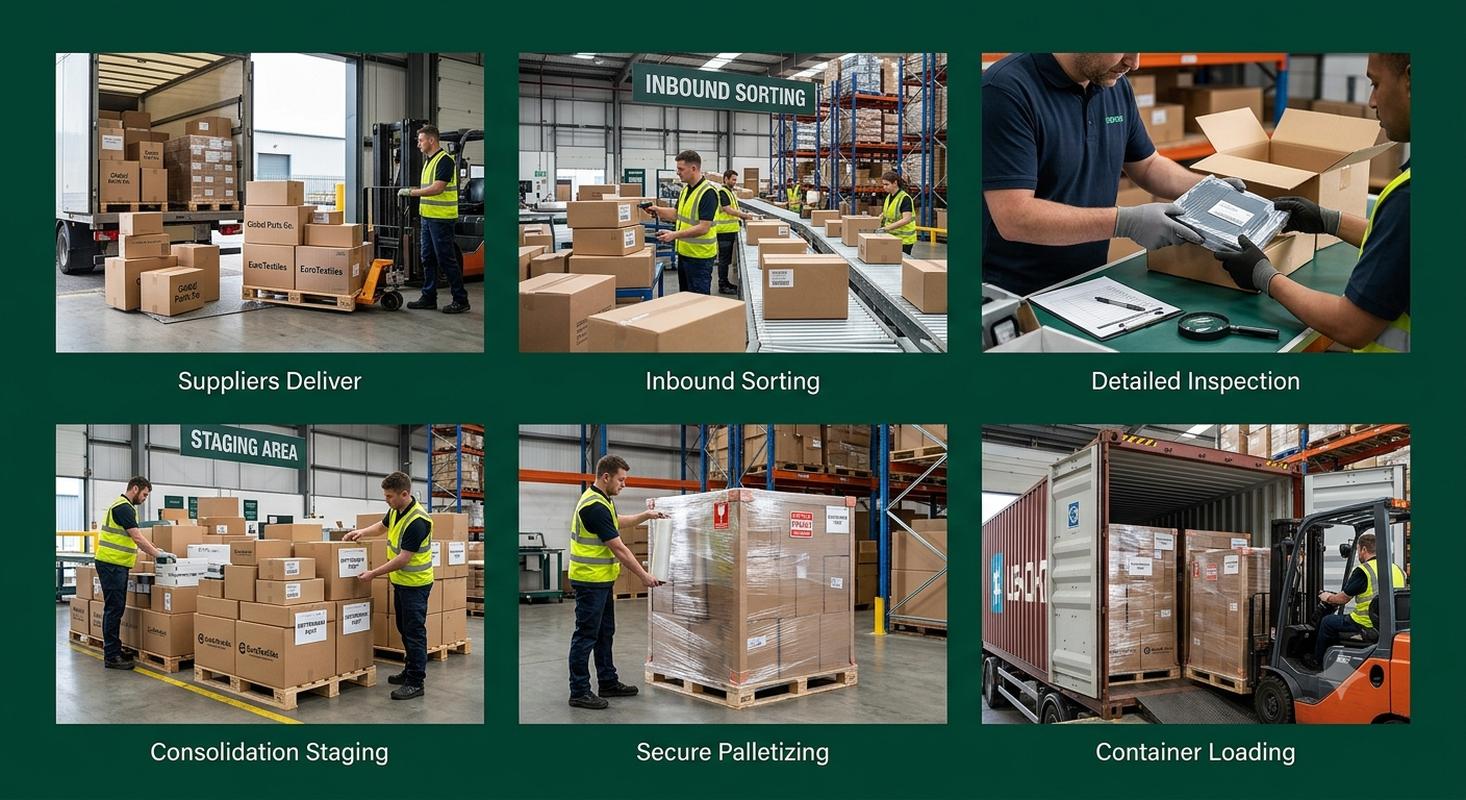
Linkup Hookah consolidates dozens of containers for lounges, wholesale and retail bar distributors in North America, Europe and the Middle East on a monthly basis. Each product load is photographed in a step-by-step approach to loading and is organized according to product type and wrapped and strapped to maximize container shipping capacity.
The economics of importing bulk hookah supplies depend on container utilization. A 40HQ container can achieve optimal use of weight and space shipping 60% bowls and 40% stems and charcoal, achieving the best price per cubic meter. Also, when you consolidate every SKU into one container, you simplify your inventory. One truck comes, one forklift lifts, and four weeks of inventory is stored in less than four hours.
For B2B buyers, you should obtain a container loading plan (CLP) before making a deposit. The CLP shows the maximum number of cartons by weight and volume, where each carton is packed, and the total weight and volume. Suppliers with a professional CLP have experience with consolidated hookah shipping containers, and can expect fewer breakages and lower costs on landed goods.
If you are ready to plan your consolidated shipping container for hookah supplies, simplyrequest a container loading plan with a freight quote from Linkup Hookah.