

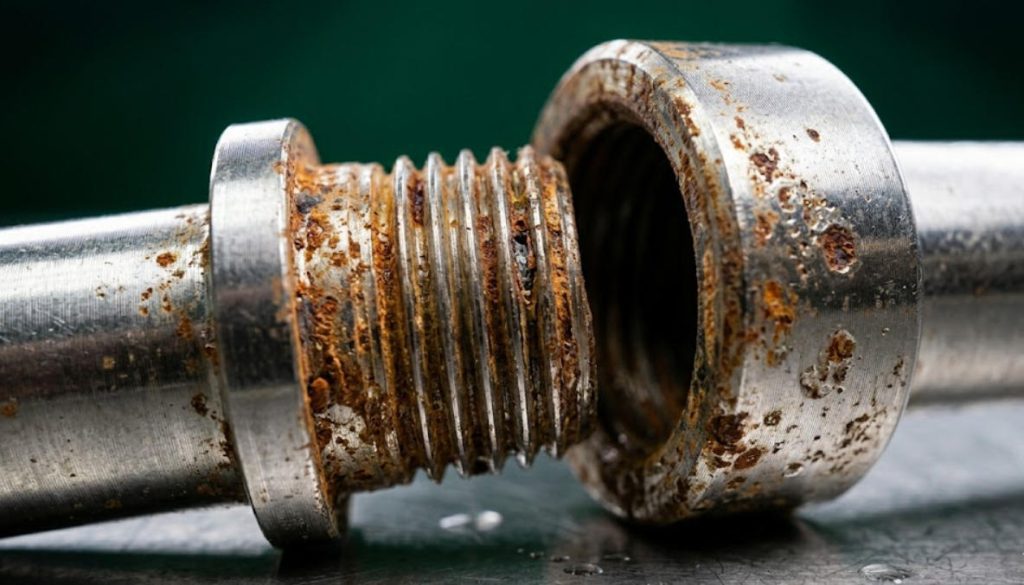
If you manage a ensembles de narguilé lounge, you’ve seen corroded threads when a down stem is pulled from the joint. Your lounge equipment contains no threads that have not corroded. Customers will come in, the staff will believe that the threads will no longer corrode, and you’ll be back to grinding your equipment. You’ll completely wear your hookah equipment tires before its time is due. Thread corrosion leads to loss of hookah integrity and, up the chain of causation, premature retirement of hookahs.
Years of experience work because of hard corroded threads. Aside from how threads corrode, what constitutes a good thread and what lube to use, this article, like many of the others, focuses on corroded threads. But thread corrosion has a predictable and unfortunate consequence. The first step toward being more responsible in your purchasing decision is learning about thread corrosion so you can apply these tips to your maintenance program.
The Problem with Plated Metals
Budget hookahs have brass or zinc-alloy parts. They are plated with chrome, nickel, or copper. Such plating only serves as a covering. It fails on threaded components because of three reasons.
- Depth of Corrosion. With plating, there is a problem with evenness. The depth of the plating has to be counted to the thread design. This leads to thin plating. In no time, the exposed area is subject to corrosion.
- Cracks Fractured during Assembly. Hookah components are assembled by screwing a plated downstem into a port. This leads to corrosion of the plating due to thermal and galvanic reaction.
- Irregularity in Plating. The hookah is beautifed with plating, but of poor quality. It leads to adhesion and coating failures. This becomes evident in the workspace after a short amount of time.
rust preventioned-thread-comparison-04.jpg” alt=”Well-maintained clean threads versus rusted threads comparison showing maintenance impact” width=”1235″ height=”656″ srcset=”https://www.linkuphookah.com/wp-content/uploads/2026/06/well-maintained-vs-rusted-thread-comparison-04.jpg 1235w, https://www.linkuphookah.com/wp-content/uploads/2026/06/well-maintained-vs-rusted-thread-comparison-04-300×159.jpg 300w, https://www.linkuphookah.com/wp-content/uploads/2026/06/well-maintained-vs-rusted-thread-comparison-04-1024×544.jpg 1024w, https://www.linkuphookah.com/wp-content/uploads/2026/06/well-maintained-vs-rusted-thread-comparison-04-768×408.jpg 768w, https://www.linkuphookah.com/wp-content/uploads/2026/06/well-maintained-vs-rusted-thread-comparison-04-600×319.jpg 600w” sizes=”(max-width: 1235px) 100vw, 1235px” />
The Fabrication of Stainless Steel — What 304 and 316 Imply.
Because of the chromium in Stainless Steel, there occurs a passivation phenomenon of self-healing due to the oxidation of Chromium. There is no coating needed.
Two grades dominate hookah manufacturing are:
304 Stainless Steel (18/8): 18% chromium and 8% nickel. This is the standard material for premium hookah manufacturing. It is resistant to oxidation and can hold mildly acidic smoke condensate. Moreover, it can maintain the integrity of threaded components after several thousands of cycles of assembly and disassembly. 304 Stainless Steel is used by several brands (Moze, Steamulation, MIG, etc.) for all their threaded connections.
316 Stainless Steel: 16% chromium, 10% nickel, and 2% molybdenum. The 2% molybdenum in this grade of steel makes it useful in environments where there may be chlorides present, particuarly acidic environments. For most hookah manufacturing applications, 316 Stainless Steel is usually considered overkill. However, it can be considered an advantage in hookah lounges situated in coastal regions, as well as in environments that aggressively use cleaning chemicals.
The main difference is that the threads on the stainless steel components are not painted and are not plated. The corrosion resistance is available throughout the steel. This means that when you scratch the surface of the steel, it doesn’t expose the base metal that is vulnerable; instead, the exposed surface has the same steel and same passive healing layer.
You do not need to be experts in metallurgy to determine good quality of threads. At the sample stage, you can perform a few simple tests to allow you to identify the hookah maintenance tips that you would require to implement before you even receive the product that you purchased.
The Magnet Test
Austenitic (304 and 316) stainless steels are not magnetic after they are annealed. Therefore, a threaded component that is made with 304 or 316 stainless steel should not attract a refrigerator magnet. If a so-called stainless steel thread sticks to a magnet, you are most likely looking at 430 stainless (a lower grade of chromium) or plated steel. You should not be working with that supplier.
The Visual Inspection
Run your finger along the thread. Plated threads may have tool marks, unevenness in color, or discoloration at the thread root where the plating is the thinnest. Stainless steel threads that were machined from the bar have a consistent color that is a matte silver with no variation between the peak and the root of the thread.
The Assemebly Test
Thread two parts together. Since plated threads tend to have a burr due to the plating process, they tend to feel gritty. When threads are machined properly, they have a smooth and consistent resistance.
Testing these methods is the most important step when dealing with wholesale orders. With a sample, they may have threads done by hand, but the threads on the production runs from the same batch may be done with a manufacturing process that is significantly faster. Always test production samples, never the engineering prototypes.
Food-Grade Lubrication — The Cheap Insurance
Even precision stainless steel threads require lubrication. The lubrication helps with seal quality and protects the thread. While stainless steel threads have a relatively long lifespan, the lubrication does help.
Food-grade lubricants fall under H1 from the NSF. They lubricate threads and theoretically protect the joints from rust. They also help protect the components from the manufacturing process. When dealing with hookah applications, it is non-negotiable. Your guests are inhaling. Do not use petroleum-based grease or WD-40 with propellants and solvents.
Silicone or PTFE greases can be used to lubricate threads and help support thermal stability, water resistance, and inertness. That is, lubricants should not break down at 60-80°C, should not wash off during cleaning or from condensate, and should not react with cleaning solutions that contain alcohol or citric acid.
Application Protocol for Lounge Fleets
Apply a thin layer, around the thickness of a sheet of paper, to male threads only. Excess lubricant collects debris, smoke, and ash, turning to a gritty paste that accelerates wear.
Lubricate every deep cleaning cycle, which is the same as doing it every 2-3 days, in the case of a full strip and soak clean.
Before applying check for slight orange or red discoloration on the threads. This means that corrosion has begun, which lubrication will not reverse.
Always use a clean cotton swab or lint free cloth. Never cross contaminate between hookahs in your fleet by re-dipping into the lubricant jar.

Cleaning Habits that Protect Threads
Some cleaning habits you use will actually harm threads, instead of improving their longevity.
What Not To Do
Cleaning pads that have threads will cause harm because threads have tolerances that are only tenths of a millimeter. An abrasive cleaning pad will destroy the form of the threads. This will cause damage that will greatly impair the usefulness of the threads for a long time.
ultrasonic cleaners with Acidic Solutions. The Cavitation Effect can remove lubricants and exacerbate the separation of plating on threaded parts especially on plated components.
Long and repeated exposure to Bleach and Ammonia. Chlorine creates pitting on steel. If sanitization is performed with Bleach, the exposure should be less than five minutes and should be followed with an immediate rinse with distilled water.
The Right Order of Cleaning
To make certain that threads are clear of residual acid, rinse with warm water immediately after use. Use a non-abrasive nylon brush and a mild dish soap. Designate brushes for threaded components only and replace them on a monthly basis.
Tap water should never be used. It forms mineral deposits that contribute to crease corrosion on thread surfaces.
Before reassembly, air dry components completely. The most common form of corrosion that is concealed and is a major problem to hookah fleets is the retention of moisture on threaded connections.
Food-grade lubricant should be used before reassembly.
When to Replace, When to Salvage.
Not all threaded components with some form of corrosion and extreme oxidation should be replaced. Understanding the difference between surface oxidation and structural thread damage will help with proper cost management.
Surface Oxidation (Salvageable)
Superficial orange oxidation that does not change the profile of the thread is easily reversible with cleaning. Use a paste of baking soda and distilled water applied with a soft nylon brush that is dedicated for this purpose. Rinse and dry, then apply lubricant. If the oxidization issue repeats itself within three to five cleaning sessions, the corrosion is progressive. The surface of the thread is compromised.
Pitting and Flaking
The component is defective if dark craters are visible on the threaded surface or if the surface flakes when brushed with a finger. The component is irreversibly damaged. Tolerances in the threads are adversely affected and continued use will damage both parts by creating cross threads in the mating component.

Galling
Galling is a lock-up phenomenon that occurs in stainless steel threads and can be conceptualized as a type of metal welding as the threads solidify under extreme pressure and friction. This occludes the threads and makes further assembly impossible. Both galling and the resulting damage to the threads are permanent and replaceable.
What to Consider When Buying Hookahs
When you buy hookahs to supply a commercial lounge you buy a maintenance liability of at least two to five years that detracts from your bottom line.
The quality of threads on hookahs determines how many of ttuyaux de narguilé units are functional at the end of he maintenance period.
What to Look For from Wholesale Suppliers
Threaded components in stainless steel must have a grade level and be either 314 or 316. If suppliers use vague statements like alloy or stainless steel or give no grade level then it is a red flag.
Demand machined, uncoated or plated, stainless steel components. Components that are plated will corrode and will not offer a long term solution.
The best designs use inserts that can be threaded into the component and optionally removed. A single damaged port should not scrap the entire unit.
Linkup Hookah’s premium hookahs — including Moze, Steamulation, and MIG — feature 304 stainless steel that includes machined stainless steel threads and replaceable threaded parts. This is the technology that enables your fleet to endure daily use over long periods of time.
Where the Value is Found
A hookah consists of multiple components. An interface is a part of an assembly that makes it operational. A 304 stainless steel downstem is worthless if it has a rusted thread — just as a bowl port is worthless if the base thread has pits. A system fails when a thread fails.
At wholesale, a hookah made of 304 stainless steel costs noticeably more than a hookah made of plated brass. However, that expense is justified if replacement parts, maintenance time, and lost revenue caused by out-of-service inventory is taken into account over three years of daily use.
Perform the magnet test on your entire fleet. Check each thread on every hookah. Use food-grade lubricant on every thread. For your next order, specify thread quality, and make it a priority.
Your threads are the foundation of every session. You need to show them the same respect.