


- Ventilation: The Most Effective System
- Charcoal Selection: Natural vs. Quick-Light and CO Impact
- Hookah Sickness Staff Training: Identifying and Responding
- Ventilation and Air Quality Products for Your Lounge
- Shisha Lounge Safety Checklist: Prevent Hookah Sickness Toda
- The Take Away: Safety is Good for Business
Every lounge owner deals with the same scenarios. A patron comes in for the first time and walks out after complaining of dizziness and nausea. Customers call it a case of being “too high”, but the truth is, it is hookah sickness caused by an overload of carbon monoxide, nicotine, and dehydration. If you run what you think is a professional lounge, customer satisfaction is a major concern. Understanding how to stop hookah sickness from occurring in your lounge is a safety concern for your reputation and keeps customer return rates high.
As an owner, you may think this problem only occurs to new customers, but it’s likely to affect your seasoned clients as well. This usually happens when they change to a new, stronger tobacco blend, or a high heat system. The good news is that hookah sickness is totally preventable. This guidebook will inform you of the three major causes you should know about and the policies that you should put in place and show your employees how to identify the problems before they manifest.
Maintain an enjoyable and safe environment in your lounge is the goal of these strategies. From London to Dubai, every customer will have a reason to come back!
What Is Hookah Sickness? Understanding the Three Root Causes
Hookah sickness can be defined as several different symptoms. These symptoms are caused by three independent elements, which can be found in hookah lounges. To understand what causes hookah sickness and how to prevent it, you must understand these three elements.
1. Carbon Monoxide Poisoning
Hookah sickness is dangerous fires and is the least understood. The production of Carbon Monoxide happens when coals burn out, airflow is restricted, or even in lounges that are poorly ventilated. During an average hookah session, Carbon Monoxide levels rise to an amount similar to the smoking of several cigarettes. Since this occurs in an enclosed space, the levels rise extremely rapidly.
To put it in simple terms, Carbon Monoxide binds with blood 200-250 times stronger than oxygen. This results in a population with insufficient oxygen and leads to hypoxia. The symptoms of this include headache, extreme fatigue, and nausea. Severe exposure to Carbon Monoxide can lead to the loss of consciousness. It has been found that after a single hookah session, Carbon Monoxide levels in smokers reach about 10-20 percent, which is alarming and detrimental to industrial needs.
Risk factors for the production of Carbon Monoxide include:
- – Use of quick-light charcoals as opposed to natural coconut charcoals. Quick-lights burn out faster and produce increased amounts of Carbon Monoxide.
- – Poor ventilation that doesn’t provide air exchange.
- – The use of multiple hookahs in a small room.
- – The use of partially burned coals instead of complete coals.
- – Heat Management Devices (HMDs) restrict oxygen flow to coals when placed too close to the cuvettes de narguilé.
2. Nicotine Overdose (Nicotine Sickness)
Nicotine sickness from hookah tobacco is the second reason for concern. Many people think that sitting in a hookah lounge is a “safe” way to consume tobacco, when in fact, many hookah tobacco brands that are popular and consumed in lounges, such as Tangiers, Darkside, and many others, can have as much as a pack of cigarettes full of nicotine in just one bowl. If the bowl is heated aggressively or overpacked, the effect can be worse.
The most common symptoms of hookah sickness include paleness, increased heart rate, cold sweats, nausea, and vomiting. Some people report that they feel an intense sense of anxiety with an impending doom that sets in around 15-30 minutes after they start smoking hookah. This is the time it takes for the nicotine to be absorbed.
Things that can worsen the nicotine sickness:
- – Serving unwashed or dark-leaf tobacco and not informing guests how strong the tobacco is.
- – Overpacking the bowl.
- – Using too many coals (3 with a closed HMD).
- – Serving guests that are beginners or have low nicotine tolerance.
- – Continuing a session longer than 60 minutes without a break.
3. Dehydration
Dehydration is a silent amplifier. The hookah smoke carries the warm, dry air, first heating and then irritating the respiratory tract and causing more mucus to be produced. On top of that, the tobacco contains nicotine which is a mild diuretic that further dehydrates the hookah user. In addition, this is compounded by a warm social environment that contributes to dehydration along with an alcoholic social setting. In addition, dehydration along with CO toxicity, and nicotine toxicity causes a guest to be highly susceptible to the toxicity along with the symptoms of CO and nicotine poisoning, causing a more synergistic and concentrated effect.
Hookah sickness is almost guaranteed when a guest is smoking dark leaf packing tobacco along with three quick light coals in a room with poor ventilation, along with a combination of high temperature equipment and mild dehydration. Close attention to this combination allows the making of an effective prevention policy.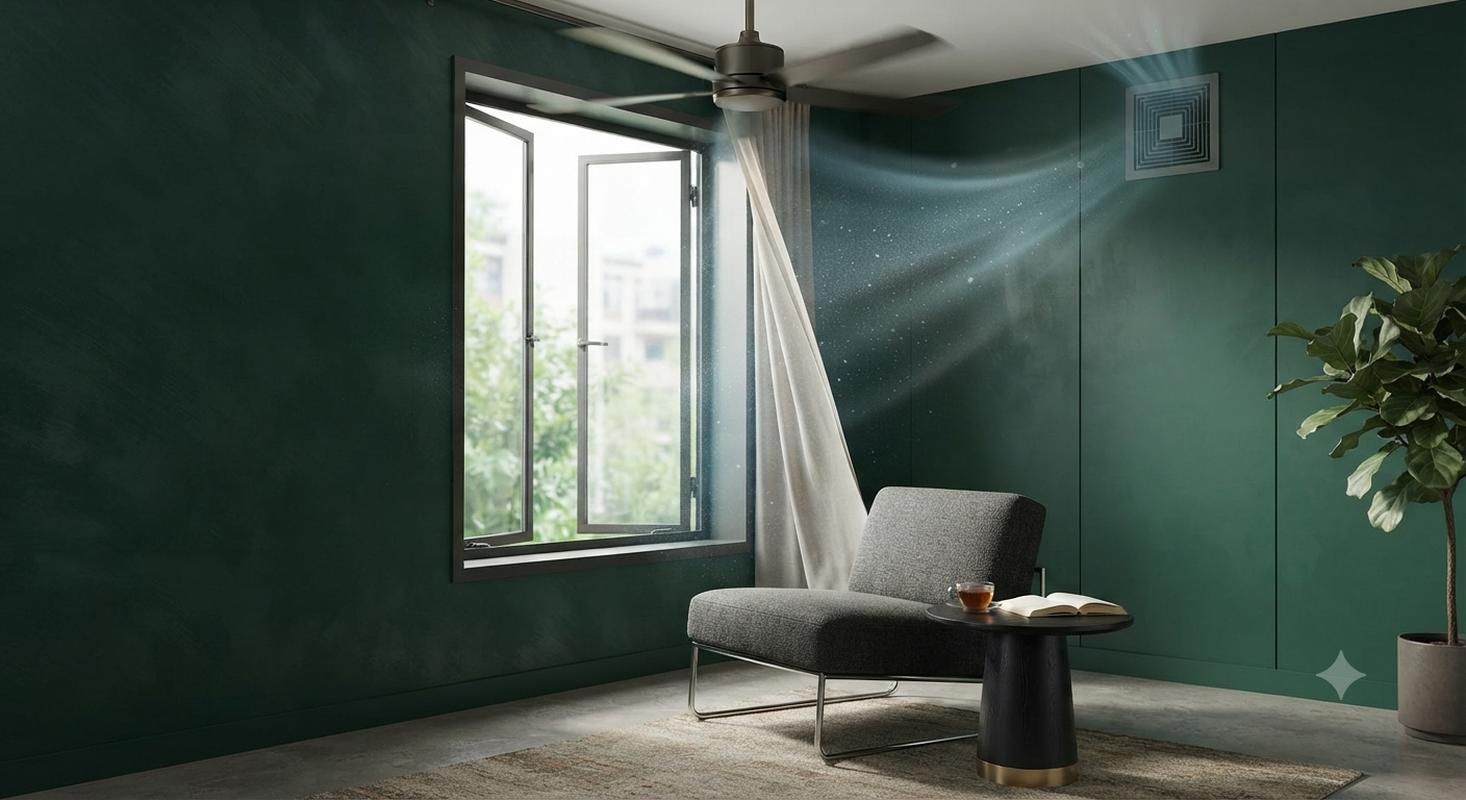
Ventilation: The Most Effective System
If you implement one of the many systems to eliminate hookah sickness from your establishment, invest in proper ventilation. CO from a hookah is colorless and odorless. Hookah sickness occurs in your guest and staff without them knowing about their exposure.
The rule of thumb for shisha lounge safety is that you have to exchange all the air in a room at least once every 15 minutes. That means in order to meet the standard, you need to completely replace the air in your lounge four times an hour. This may sound crazy, but it will be true for a lounge that is 1,000 square feet and has 10-foot ceilings (10,000 cubic feet of air). To achieve 40,000 cubic feet of air flow a hour (approximately 670 CFM), you will need a powerful ventilation unit.
Here are the ventilation methods, ranked from best to worst:
- An ERV/HRV. These systems do a complete air exchange and keep the temperature of the air balanced. These are the best for safety and can be paired with CO sensors that activate if CO levels get too high.
- Commercial kitchen-style exhaust hoods above the hookah tables. These also have great CO safety standards and can serve several tables.
- Ceiling fans that are high powered, combined with operable windows and wall vents. This is the best option for climates that allow for open windows.
- Portable air purifiers with activated carbon and HEPA filtration. These systems will help clear the air, but they help very little when it comes to CO.
You should not rely on air conditioning, either. Most air conditioning systems just recirculate air. A lounge that is running air conditioning and has closed windows can get dangerous levels of CO in the room in just 2 hours during peak operations.
Best practice: Install wall-mounted CO detectors in every room where hookah is served, set to alarm at 35 ppm (the NIOSH ceiling limit). Log readings daily. If any detector reads above 20 ppm during operating hours, increase ventilation immediately.
Charcoal Selection: Natural vs. Quick-Light and CO Impact
There is a direct connection between the type of charcoal used and the level of CO exposure for your guests. Therefore, changing the type of charcoal used is one of the most significant actions you can take in your efforts to improve hookah smoke health in your lounge.
As a result, using 100% natural coconut shell charcoal is the better option. It is a cleaner burn charcoal with less CO, no chemical additives, and a quicker burn to a stable temperature. When a coconut charcoal is fully lit (glow is uniformly orange, with no black burn spots), they can produce less than 10 ppm CO at the hookah bowl with good ventilation.
Conversely, quick-light (self-igniting) charcoal is a poor choice. These type of charcoals are lit using sodium nitrate and other accelerants. These accelerants, when burnt, create a host of byproducts of combustion that include CO and NOx. Even after the accelerant has burnt off, a quick-light charcoal will generally produce a higher rate of CO than a natural charcoal burn, given their port structure and density. In one of the studies published in the journal Environmental Health Perspectives, the use of quick-light charcoal for a hookah session, as opposed to the use of natural charcoal, resulted in CO levels that were 2-3 times higher under the same conditions.
There are a variety of other adverse experiences from not using a natural charcoal. Quick-light charcoal can spoil the surface taste of the tobacco, and the burn rate can negatively affect the cost to operate your lounge.
Recommendations for operators of lounges:
- – Transition to serving 100% natural coconut shell charcoal. Though the cost may be higher, the improved experience to the guest and reduced liability risk make it worth the investment.
- – Pre-light coals before serving them at the guest table. Fully ash over coals should be pre-lighting for 8 to 12 minutes. Never serve coals that are not fully lighting to the guest table.
- – Store coal in a controlled environment where the moisture is at or below 50%. This will prevent the coals from absorbing moisture as well as decrease the chance of the coal not burning completely and increasing the risk of Carbon Monoxide (CO).
- – It is important to train staff to the visibility of fully lit coals: coals should have a light gray as also be uniformly lit, should not have black patches, and should have an orange glow.
 Linkup Hookah’s Premium Natural Charcoal
 Linkup Hookah’s Premium Natural Charcoal
Linkup Hookah’s premium natural coconut charcoal is low-ash, kiln-fired coconut shell charcoal that, when lit, produces minimal CO. Our product allows us to serve bulk lounge chains in each pack with consistently sized 22mm and 26mm cubes. Feel free to look at our natural charcoal collection.
Session Duration
Once you have soaked the tobacco and finished packing the bowl, the coal management and the rest of the session is entirely up to you. This is where your policies and your procedures meet.
The CDC and WHO recommend limiting sessions to 60 minutes. After 60 minutes, the amount of CO and the amount of nicotine leaves the body at such a concentration that even a healthy individual will feel the effects. Make it a policy to limit each bowl to 60 minutes. After each bowl, make sure you do not light a new bowl for at least 15-30 minutes. This will allow for much better control of the health risk of hookah.
Heat Management:
Higher temperatures draw more nicotine from the tobacco and lead to greater CO output. Using three coals on a standard bowl with a heat management device (HMD) can produce around double the nicotine of two coals and an open HMD. It is recommended to train your staff to:
- – Start sessions with a moderate heat level (using two coals with the bowl and an HMD in an open or partially open position).
- – Adjust the level of heat based on customer feedback, not just on cloud production.
- – Do not leave an HMD in a closed position for long periods of time. It cuts off oxygen to the coals and causes an increase in CO.
- – After 45-50 minutes, replace the coals instead of adding fresh coals on top of the used ones.
Choosing tobacco and educating your guests:
- – If dark-leaf tobacco is on your menu, highlight or verbally explain where it is on the menu, so new smokers will not order a high-nicotine blend.
- – If tobacco is washed or blonde-leaf, offer a young, low-leaf option for sensitive smokers.
- – For first-time hookah guests, ask about their past smoking experiences and what their nicotine tolerance is.
- – Follow the manufacturer’s recommended bowl packing density, and never overpack. Overpacking bowls leads to smoke that is high in nicotine, and it will lead to a high production of CO as well.
Linkup HMDs for Safer Sessions
Linkup Hookah offers a variety of heat management devices with optimal airflow and the ability to manage and regulate temperature, in order to provide a quality customer experience while minimizing CO and nicotine extraction. For more information on HMDs and what Linkup Hookah has to offer, please visit the Linkup Hookah page.
Providing Water and Light Snacks for Each Session
Almost zero effort and practically no cost can greatly reduce hookah sickness and lounge incidents. If your guests are provided with water and light snacks, then the negative effects of smoking hookah are buffered lessening CO and nicotine toxicity.
Water protocol:
- – Always provide one glass of water per hookah session, and do so before you are even asked.
- – Flavored water, herbal teas, and electrolyte beverages can be the paid, premium options on our menu.
- – Server the wait staff in checking the hookah water levels and offering refills along with replacing the coals every 45 – 50 minutes.
- – It is important to do so with more frequency in the summer, as well as warmer climates.
Food provisions:
- – Light snacks should be the only food provided and can include fruit and cheese plates, as well as nuts. This can slow the absorption of nicotine, as guests won’t be smoking on an empty stomach.
- – Do not provide salty snacks.
- – Sugary beverages can be the most fun and are also definitely the worst. They lead to blood sugar spikes and harmful crashes that can worsen hookah sickness.
- – Provide beverages that have mint or ginger, both are great for anti nausea.
A few lounges have incorporated a “hydration ritual.” After the first round of coal changes (roughly every 45 minutes), staff bring fresh water for the table and offer a healthy snack. This focuses on sickness prevention and enhances customer service. This system is incredibly effective, as guests leave and ultimately remember their positive experience.
Hookah Sickness Staff Training: Identifying and Responding
Your staff are the primary defense against hookah sickness. They are the front-line employees who are best placed to manage the guests and intervene to prevent the escalation of a mild reaction to a medical emergency. Every employee who serves hookah should be trained to recognize symptoms and respond appropriately.
Symptoms include the following symptoms (the “Pale, Sweaty, Wobbly” checklist):
- – A guest develops a pale or ashen skin color (especially noticeable in face and lips).
- – A guest might develop cold, clammy sweat on their forehead, neck, or palms.
- – A guest might develop dizziness, light-headedness, or describe the sensation as “room spinning.”
- – A guest may develop symptoms of nausea — pushing the tuyaux de narguilé away or stopping smoking — or pushing the hose away to excuse themselves.
- – A guest might develop slurred speech or confusion (the guest is experiencing severe CO exposure).
- – A guest may develop a complaint of a dull frontal headache (the guest is exhibiting a classic CO sign). A guest may also develop rapid breathing.
In the event of the symptoms listed above taking action to resolve the symptoms should be your priority. The following should be conducted in order:
- Move the guest to a location that is not the smoking area. Move indoors (to an active hookah lodge) and/or away from an active hookah.
- Have the guest sit down and bend their head between their knees. This also helps with dizziness and helps to increase blood flow to the brain.
- The guest should slowly sip cool water (NOTE: water should not be cold (risk of shock), and water also should not be carbonated (may worsen nausea).
- A cracker or piece of bread should be offered to the guest to help settle their stomach.
- The guest should be monitored for 10-15 minutes to see if fresh air helps resolve their symptoms.
- If a guest’s symptoms worsen, remain for more than 20 minutes, or if they lose consciousness, start vomiting, or experience severe confusion, call an ambulance. Symptoms should prevent the guest from driving.
What NOT to do:
- – Do not serve the guest coffee or energy drinks. It’s best to avoid caffeine in this scenario. It can raise the heart rate and dehydrate the guest more.
- – Do not send a guest to the bathroom alone, as they may faint.
- – Do not leave the guest alone for any reason until their symptoms have fully subsided.
Documentation: Simply log every incident. Note the date and time, how long the session was, type of tobacco used, type of charcoal used, number of coals, how the coals were placed, symptoms of the guest, how the incident was resolved, and any other actions that were taken. Review your logs monthly to determine trends. If incidents occur more frequently with a specific tobacco brand or a specific seating area, place the tobacco elsewhere or change the seating arrangement.
Ventilation and Air Quality Products for Your Lounge
Ventilation Tips & Equipment: To reduce the prevalence of hookah sickness across your lounge, creating fresh air circulation should be a key concern. Linkup Hookah offers assistance with designing ventilation, CO monitoring, and air exchange systems for shisha lounges.
Shisha Lounge Safety Checklist: Prevent Hookah Sickness Today
Use this checklist to assess your lounge’s preparedness and safety protocol. For each item, provide evidence that they are in place.
☐ Each smoking room is equipped with a CO detector that is calibrated and tested monthly.
☐ Ventilation system provides a minimum of four air exchanges per hour (a 15 minute exchange time).
➔ Only natural coconut charcoal is used. No quick-light coals are used.
➔ Proper pre-lighting methods assure coals are heated with Electric burners for 8-12 minutes.
➔ Staff are trained to recognize symptoms of sickness related to hookah and respond accordingly.
➔ Water is provided for free with every hookah order.
➔ Nibbles are available for purchase and provided during premium sessions.
➔ Each session is for 60 minutes. There is a 15 minute break mandated in between bowls.
➔ Staff are trained to recognize the level of experience of a guest in order to help them decide if they are going to order dark tobacco.
➔ When the hookah is loaded, the HMD lid is not left fully closed for airflow.
➔ A monthly review is conducted to analyze any patterns that may have occurred in the incident log.
➔ Staff are provided with a list of emergency numbers to reach out to during an emergency.
How Safe is Your Lounge?
12/12 = You Meet Industry Standards
10/12 = Good Safety Standards
1-2 Problems Per Month Must Be Addressed
8/12 = Safety is Important and a Must
7/12 = Industry Standards Must Be Followed
The Take Away: Safety is Good for Business
Your lounge welcomes visitors with the use of ventilated systems with the appropriate charcoal selection for hookah bowl sessions in order to eliminate hookah sickness. For each sickness that you prevent, there is a guest leaving your lounge and they leave a positive review and are sure to spread the word.
To protect your guests from “hookah sickness” and embrace the safety-in-service model, natural charcoal, staff training, and investments in ventilation systems should be considered. Compared to lounges with no systems, lounges that utilize safety and well-being systems enjoy better guest loyalty, more repeat business, and less liability. Less sickness and better reviews help to reduce the burden of the investments.
Linkup Hookah is your partner for a safe and successful lounge offering everything from natural coconut charcoal to ventilation solutions and supports. To satisfy the use of safety and well-being systems, we offer coconut charcoal and other related products in bulk to help lounges, bars, and restaurants operate more efficiently. Contact our sales team now to help develop your lounge safety and comfort.
Linkup Hookah is a Chinese-based, business-to-business supplier of premium hookah products, including natural coconut charcoal, heat management devices, hookahs, accessories, shisha tobacco, and related products. We serve lounges, bars, restaurants, and distributors overseas. Linkup Hookah offers OEM and ODM services, bulk discounts, and global delivery. For more information, visit www.linkuphookah.com.