

- The problem was too much water in the hookah base. Mohammed
- The Hookah Water Level Guide — Finding Your Sweet Spot
- Adjusting Water Level for Different Setups
- Phunnel Bowls vs. Egyptian Bowls
- HMD vs Foil
- Tobacco Moisture Compensation
- How to Measure Water Level Precisely
- Common Level Mistakes
- Recommended Products from Linkup Hookah
- Final Thoughts
Mohammed worked six months to purchase his first high-end hookah setup. The shipment came on a Tuesday. He carefully unpacked individual components including his stainless steel stem, hand-blown glass base, phunnel bowl, and heat management device. He assembled, packed, cooked, and took his first pull.
But his first pull produced nothing; well, hardly anything. He got a thin stream of smoke and a watery gurgle. There was no rumbling, and certainly no smoke clouds. Mohammed checked and tested every mechanism to perfect his setup. Each time he got the same result.

The problem was too much water in the hookah base. Mohammed had filled his base to the tip of the downstem.
Lounge owners must have a hookah water level guide. The difference between a great session and a disappointing one is a few millimeters.
Importance of Water Level
A hookah base is not just a water container. It is an acoustic chamber, a filter system, and a pressure regulatory chamber. Each millimeter affects the hookah’s performance.
When air is drawn through the hookah, smoke enters the stem and submerges in the water before epoxying the hookah hoses port. How the downstem and water interacts defines three critical aspects: Diffusion – the degree of smoke breakdown into bubbles. More water creates smaller bubbles and more filtration.
Back pressure occurs when vapor rubs against the walls of the hollow stem. The hollow stem acts more as a vapor channel when submerged deeper in water.
Noise can be attributed to the structure of the hookah and the depth of water. The water creates an acoustic profile. As the hookah water levels change, the noise it makes changes as well.
This is measured, not estimated. The hookah water gauge allows you to use the same water levels every time, eliminates the need to eyeball the water levels for each session, and eliminates guesswork.
Lounge owners who have trained their staff on these levels have more consistent customer satisfaction and repeat business. Customers with two great experiences are more likely to return. All of this can depend on meticulous water measurements.
The Downstem’s Physics
The downstem is a hollow pipe submerged in water with its end closed. The end of the downstem is submerged at an arbitrary depth.
It’s like a straw. If submerged deeper into the drink, more effort is required to draw the drink through the straw. The same is true for a hookah.
The higher the pressure in the water, the harder the vapor is to push through, and it creates a rumbling noise. The pressure is determined by how submerged the downstem is. The holes on the downstem create smaller holes and break the vapor into even smaller bubbles and allow it to pass through the water.
The Meaning of Rumble and Restriction
As smoke passes through the water of a hookah, it generates a sound called rumble. Rumble is a type of vibration that occurs when the bass resonates. Some smokers enjoy a loud and deep rumble, while others enjoy a level of water that produces no rumble at all, which is complete silence. The water level in a hookah is a determining factor in how loud the rumble is.
On the other hand, restriction refers to the degree of difficulty one encounters when inhaling through the hookah. A draw that is easy to inhale through has low restriction and one that is harder to inhale through has high restriction. Both can be equally rewarding, and can be done by understanding how to adjust each setting to your preference.
The change in one will yield a change in the other. The trade-off of restriction and rumble not only depends on the hookah, but on the water level in the base of the hookah as well. The better the trade-off of restriction and rumble, the better the hookah setup is.
The Hookah Water Level Guide — Finding Your Sweet Spot
There are three water levels in this guide: low, medium, and high. With each of these three, the session will be impacted in a new way.
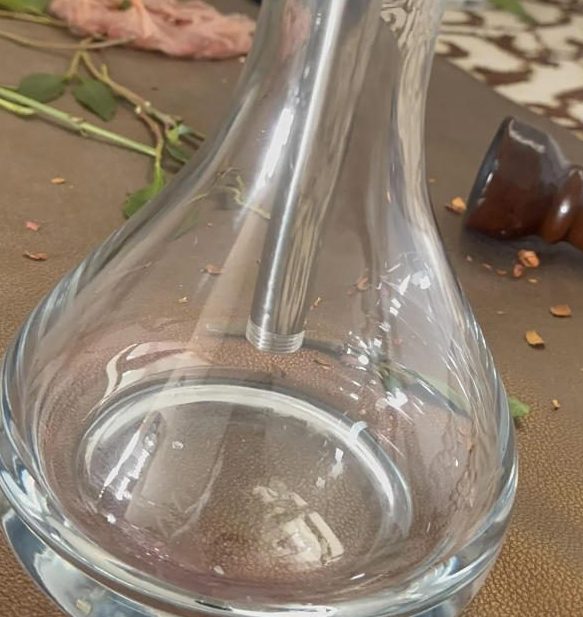
Low Water Level — Light Rumble, Open Draw
To achieve a low water level, fill the base of the hookah to a depth such that the tip of the downstem is submerged by 5 to 10 millimeters.
What you get:
- – Hefty bubbles
- – Venting rumble and gurgle
- – Medium draw with some restriction
- – Maximum filtration – minimizes shisha flavors
Best for: Those who prefer draws with restriction, and do not mind sacrificing flavor for satisfaction.
Watch out: Pending splashing and flavor loss.
High Water Level – Heavily Restrictive Draws
Fill the base so the downstem tip sits 25–35 mm below the water surface.
What you get:
- – Large bubbles
- – Hefty rumble
- – Tight draw
- – Maximum filtration to the rez
Best for: Smokers who prefer satisfaction
This level is more for trial and error. Adjust up or down the water line until you get your preference.
What you get:
- – Small thick bubbles
- – Loud bass rumble
- – High restriction — tighter draw
- – Maximum filtration — better smoke, smoother with slightly less flavor
Best for: Smokers looking for a more traditional and weighty feel. Harsh tobacco blends where extra filtration is recommended. Large hookah stems with a considerable height.
Watch out: If the downstem is too extended, you can get water in your hose because the long downstem may pull up the hookah stem. This is particularly common if you are just starting out.
Adjusting Water Level for Different Setups
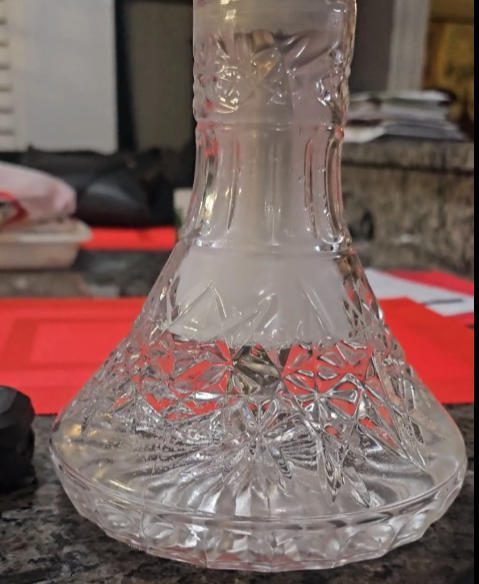
Hookahs showcase a fair amount of variety. Water levels can differ because of quite a few factors such as stem height, downstem length and design, and even the particular bowl you are using. A tall stem, as in the Steamulation Ultimate or Moze Breeze Pro, comes standard with an elongated downstem, compared to a more compact travel hookah. This also determines water height regardless of distance.
The design of the base plays an important role too. The bulbous bases are wider and tall stem hookahs need more water. In contrast, bases with a narrower design rely on downstem length more. The downstem can be in the water even if the base is filled less. This is also the reason we prioritize designing water levels for your particular setup.
Phunnel Bowls vs. Egyptian Bowls
Phunnel bowls are designed with a single central hole and are restricted by design. Consequently, the draw is more open with a lower water level, around 5 to 15 mm.
Egyptian bowls have a few small holes. This means airflow is generally more open. A mid-level water filling (around 15–20 mm) is sufficient for creating back pressure, allowing for a balanced draw.
HMD vs Foil
The weight and heat retention of HMDs (heat management devices) are great, but they also partially restrict the airflow at the top of the setup. This means a slightly lower water level (around 10–15 mm) is ideal when using an HMD.
Foil setups are more open on top. A medium to high water level (15–25 mm) is sufficient to balance the draw and create the rumbles that are typically absent in foil sessions.
Tobacco Moisture Compensation
Wet shisha tobacco produces thick shisha smoke and requires less filtration, so a lower water level is best.
A higher water level is best for dry shisha tobacco.
This is one of the more commonly overlooked variables when preparing a hookah session. A good hookah water level guide will factor tobacco moisture. Dry blends such as dark leaf packing require more water depth than juicy blond leaf blends.
How to Measure Water Level Precisely
If you want to stop guessing, here are ways to achieve the same water level each time.
Method 1: The Marking Method
Fill the base, assemble the stem, and take it apart. Check the stem to observe the wet line. Measure the distance to the tip of the downstem and take note. Pour out the water, make any adjustments, and repeat until you reach the desired fill. Use a glass marker to note this height on the base.
Method 2 – The Tape Technique
For the tape technique, you’re going to put a small piece of tape directly on the downstem at the desired water depth, let’s say 15 mm down from the tip. While holding the downstem in the base, pour water slowly until it just touches the tape, then remove the downstem and see how close you got. If you went a little past the tape, or need to go a little deeper, adjust accordingly and repeat.
Method 3 – Measuring
Using a measuring cup, add water to the base up to the desired fill line, then replace the measuring cup with the downstem. If you need to adjust the water level, remove the downstem, and pour out the same measured amount you did earlier. Repeat until you are satisfied with the water level. Afterward, maintain the same water level each time.
Remember, it is still much faster to just remember how much water you put in rather than trying to eyeball it each time.
Common Level Mistakes
All levels of smokers make mistakes, the goal is to learn what to avoid.
Overfilling
Water filled stems are a surefire way to experience wet, gurgling hits. If water runs into your hose or reaches the water line, you need to dump some out.
Under FIlling
Harder hints and smaller clouds, are the experience of under filled bongs. To remedy, add water.
Diffusers
If your downstem has a diffuser, they help to create smaller bubbles and add holes to the downstem. With a diffuser, you will need a lesser water depth, so a downstem with a diffuser does not mean you have to adjust your water level.
Changing water level mid-session — While smoking, adjusting the water level changes the structure of the residue and ash, resulting in ruined flavor. Plan your water level before the session.
Not accounting for ice — Ice displaces water and takes up space at the water line. If your hookah base has ice in it, start your water level lower by 5–10 mm.
Ignoring room conditions — Hot and dry air causes water to evaporate quicker. Adjust your water levels between rounds when you smoke in a dry climate. Water levels might go from 15 mm to 10 mm after an hour in a base full of boiling water.
Recommended Products from Linkup Hookah
To adjust water levels, you need to have the proper base and bowl. Linkup Hookah sells products that allow for easy and precise adjustments of water levels.
Custom Glass Hookah Base — Looking for an easy, affordable way to keep track of your water level? With a custom base from linkup, you’ll have no problem, thanks to their stable, custom, hand-blown, glass hookah bases.
Oblako Phunnel Bowl Head– Looking for the handle on water level to be a little easier? One of the most balanced sessions comes from a medium water level of about 15-20 mm. With a single hole, these bowl heads pair with a standard downstem. Made of high quality clay to retain heat.
Kaloud Lotus III HMD — water level becomes even more important with an HMD. The Lotus III adds top-end restriction which needs to be balanced at the base. Start at 10–15 mm water depth and adjust from there.
Final Thoughts
Water level changes with every variable — different hookah, bowl, shisha, even room temperature. But the principles stay the same.
Start at medium. Get familiar with your specific setup. Pay attention to volume.
Mohammed finally solved his problem. He drained half the water from his base. He refilled to 15 mm below the downstem tip. He packed a fresh bowl of apple shisha. He took his first pull.
Thick smoke. Deep rumble. Clean draw.
Just water, but it changed everything.
Your lounge can deliver the same transformation. Train your staff on water levels. Give each hookah station a measured fill line. Make water level part of your standard operating procedure.
You’ll want to keep this hookah water level guide handy. You can measure your fill, dial your rumble, and set your restrictions. You’ll be able to create memorable sessions for your customers.