


- The US Trade Section 301 Tariffs on Chinese Stainless Steel.
- EU Anti-Dumping Duties on Stainless Steel from China
- Tariff Rates Across Other Key Markets
- The Rate Gap: Stainless Steel Components vs. Finished Hookah
- How to Reduce Tariff Impact: Practical Strategies
- Best Practices for Compliance and Documentation
- Related Products from Linkup Hookah
- Conclusion
- Frequently Asked Questions
Tariffs and trade barriers likely account for a significant portion of your costs if you source hookah hardware, such as hookah bowlss, stems, trays, or fittings, from China. These costs can vary drastically due to the unpredictable nature of customs. A single reclassification at customs can change your duty tax by as much as 15%. Further, trade barriers change when global politics change. This paper analyzes the tariff situation for stainless steel hookah hardware and details intelligent ways importers adjust their trade strategies to minimize the duty tax. With low steel prices, even first-time buyers and smaller wholesalers become affected by the hooks and barriers of steel tariffs. First-time buyers and small wholesalers will likely be affected more by these hooks and barriers than bigger wholesalers. hookah accessories our hookah collection
The US Trade Section 301 Tariffs on Chinese Stainless Steel.
In the US, a number of trade tariffs, particularly from China, have been enacted using Section 301 of the Trade Act of 1974. Trade barriers against the steel used to make hookah parts are part of Section 301 of the Act. Thus, these hookah parts will incure a higher duty tax than is typical at the Most-Favored-Nation (MFN) rate.
Current rates: Starting in 2025, if you import Chinese hooks (or similar products classified as hooks and therefore falling under HS 9614) or stainless piping (HS 7306.40) from China to the US, you will incur a 25% tariff. If similar products fall under HS 7326, you will incur a 7.5% tariff.
The wide range means accurate HS Code classification matters beyond the legal formality and directly affects your per-unit landed cost. An importer taking the misstep of classifying a stainless steel hookah stem as a pipe fitting and not as a smoking accessory could lead to a rate increase and penalties.
Consider the following: a container of 5,000 stainless steel hookah stems valued at $40,000 and classified as HS 7306.40 (making them liable to the 25% Section 301 duty) means that an additional $10,000 tariff would be applicable. However, the same container classified under HS 9614.00 (and a Section 301 duty of 7.5%) would only incur an additional $3,000 tariff. The $7,000 omitted cost would directly benefit your bottom line, not your competitors, if you don’t benefit from it.
Since the Section 301 duties were imposed in 2018, a number of changes and future uncertainty have resulted from the updates and further potential impositions. As of early 2025, the USTR has indicated that they will continue the tariffs and likely expand on them as they see fit. While stainless steel hookah hardware may not be the target of strategic goods, they would fall under the broad category of “industrial inputs.” Importers should expect rates to remain and should check quarterly USTR Federal Register notices for any exclusions or changes to impositions of duties.
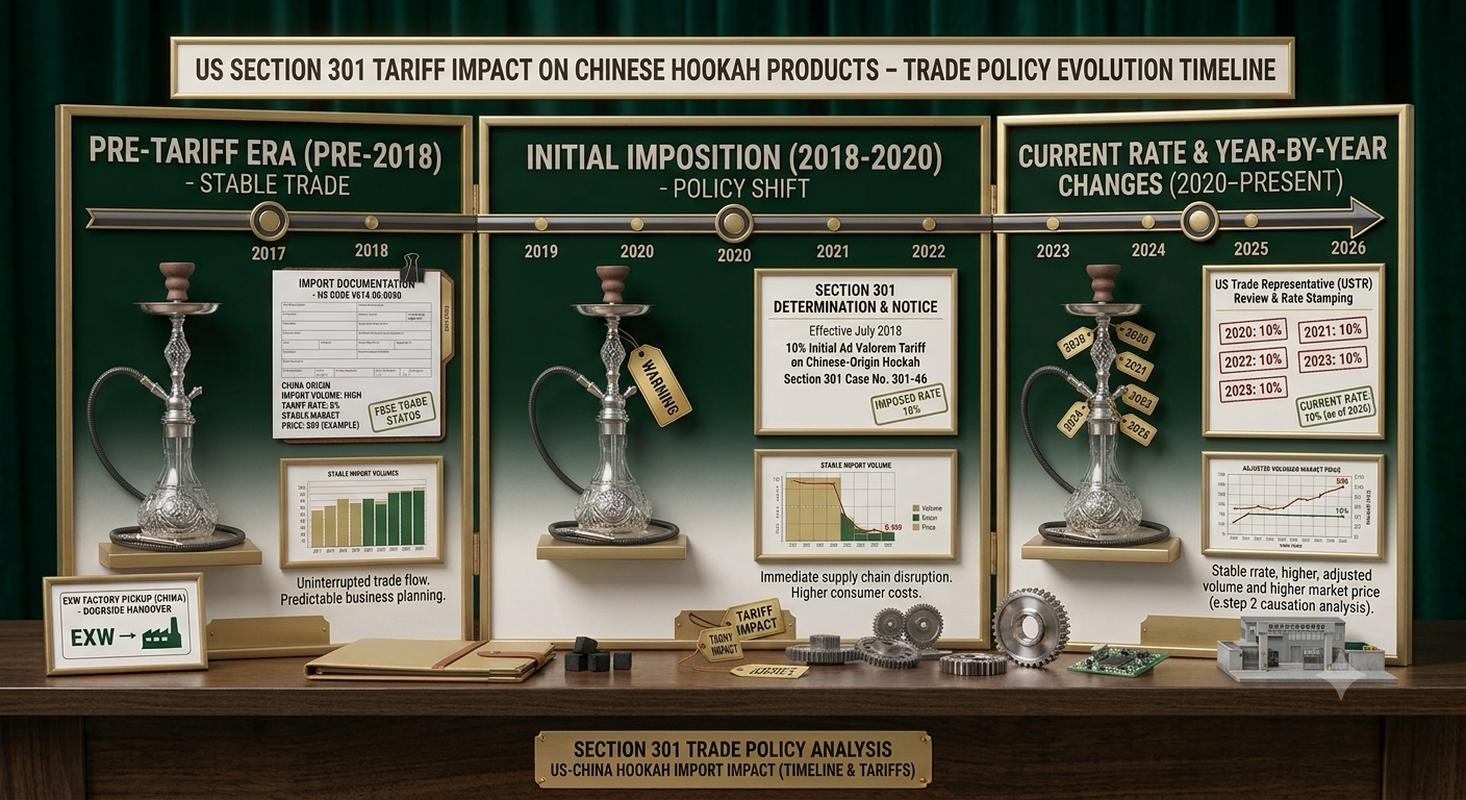
Hookah import tariff USA
The main point: If you are importing into the US, expect to pay 7.5%-25% in 301 duties on top of the base rate (generally 0%-3.9% for stainless steel articles). At this time, there are not many opportunities to find exemptions, since most product categories have seen lapsed exclusions.
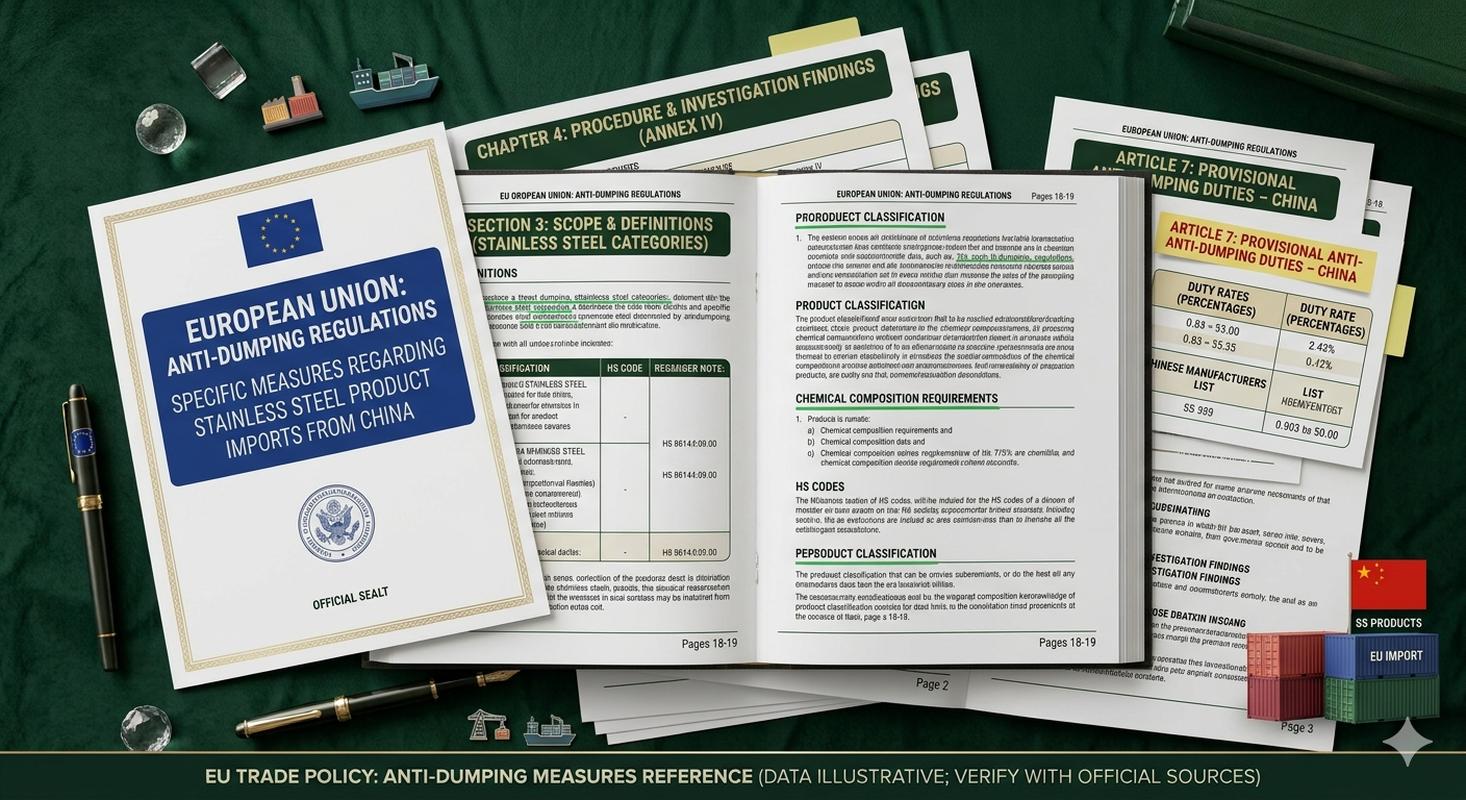
EU Anti-Dumping Duties on Stainless Steel from China
Certain stainless steel products originating from China that enter the EU are subjected to EU Anti-Dumping measures. The purpose of these measures is to counteract market price distortion and are applied in addition to the normal EU Common Customs Tariff.
For stainless steel tube and pipe fittings, the anti-dumping duties currently stand at 13.8% to 25.3% determined by the specific product type and the Chinese manufacturer. Products such as stainless steel flanges, elbows and reducers, which may also be used in hookah manufacture and assembly, are heavily targeted. Finished hookah products, as per CN 9614 00, are not necessarily subject to anti-dumping duties, but they will still incur the normal duty rate, which is about 8% to 10% depending on the Customs classification.
This leads to an interesting strategic question for EU-based importers: Should you import completely finished hookahs (lower duty, higher freight cost) or import partially finished stainless steel components (higher duty, but more flexible in the manufacturing end). The answer really comes down to the potential volume you are working with, your ability to assemble locally, and how much risk you are willing to take regarding potential litigation from Customs.
The EU has an expiry review mechanism for its anti-dumping measures. By statute, measures are valid for five years, and then any party can request a review. Importers must keep an eye on the European Commission’s expiry notices for product categories that may concern them. After an anti-dumping measure expires, it is not renewed, and the duty automatically reverts to the standard. Determined importers can designate strategic dates to make bulk purchases before the measure is lifted.
The other EU-specific concern is the Carbon Border Adjustment Mechanism (CBAM). When it becomes fully operational in 2026, it will introduce a carbon pricing mechanism for all imports to the EU. Stainless steel is a carbon-intensive product, but right now, CBAM applies to primary steel and aluminum, as opposed to finished products. If a hookah importer sells finished products that contain Stainless Steel, he should be on the lookout for product scopes CBAM may undertake, as there will be an expected 3–8% effective increase in product cost.
Tariff Rates Across Other Key Markets
While the most impactful markets, the US and the EU, have extreme import duties on importing stainless steel hookah hardware, within the ASEAN (Association of Southeast Asian Nations) region, including Thailand, and Vietnam, and Indonesia, most countries of the region have an import duty of between 0-5% for stainless steel articles under the ASEAN–China Free Trade Area (ACFTA). However, to enjoy the preferential rate, an FTA Certificate of Origin (Form E) is mandatory. Importers of hookah products, within the context of the Presented Region, perceive stainless steel as a raw material that has one of the lowest tariff structures.
Middle East & GCC: Gulf Cooperation Council (GCC) countries (Saudi Arabia, UAE, Qatar, Kuwait, Bahrain and Oman) impose a 5% common external tariff for the majority of stainless steel imports and apply no anti-dumping measures to Chinese hookah parts as of 2025. This makes GCC countries some of the lowest cost destinations for Chinese stainless steel hookah hardware.
Australia & New Zealand: Imports are tariff-free under the China-Australia Free Trade Agreement (ChAFTA) and the China-New Zealand Free Trade Agreement if the importer has a valid Certificate of Origin.
India: India applies a high tariff regime to imports of stainless steel goods, consisting of a Basic Customs Duty of 10% to 15% and a Social Welfare Surcharge of 10%.
The Rate Gap: Stainless Steel Components vs. Finished Hookah
The most important distinction for a B2B buyer is the difference between importing component parts (e.g. tubes, bowls, stems, and fittings) as compared to importing fully assembled hookahs. These two categories belong to different HS chapters or sections.
Stainless steel hookah parts (e.g. bowls, fittings and tubes) fall under HS Chapter 73 (Articles of Iron or Steel) or HS 9614 (Smoking Pipes). These categories of goods face preliminary anti-dumping measures in the U.S. (0% to 3.9%) and in the EU (0% to 2.5%). These categories face the heaviest anti-dumping measures and Section 301 tariffs because they are considered “industrial inputs” that will endanger and threaten the livelihood of domestic producers.
Finished hookah products: Assembled hookahs, particularly thookah hoses with stainless steel elements, are more likely to fall under HS 9614 as smoking apparatus. This classification has a higher base duty in most markets (5-12%) and is usually not included in anti-dumping provisions. The equation is simple: higher base duty, but lower risk of punitive levies.
Importers who want to minimize their stainless steel customs duty risk effectively rely on a mix of importing partially and fully assembled products depending on the tariff regime of the target market.
How to Reduce Tariff Impact: Practical Strategies
Savvy importers are not resigned to accepting the tariff rate, but are prepared to trade to mitigate it. The following outlines the most effective ways to reduce the import burden of stainless steel hookahs:
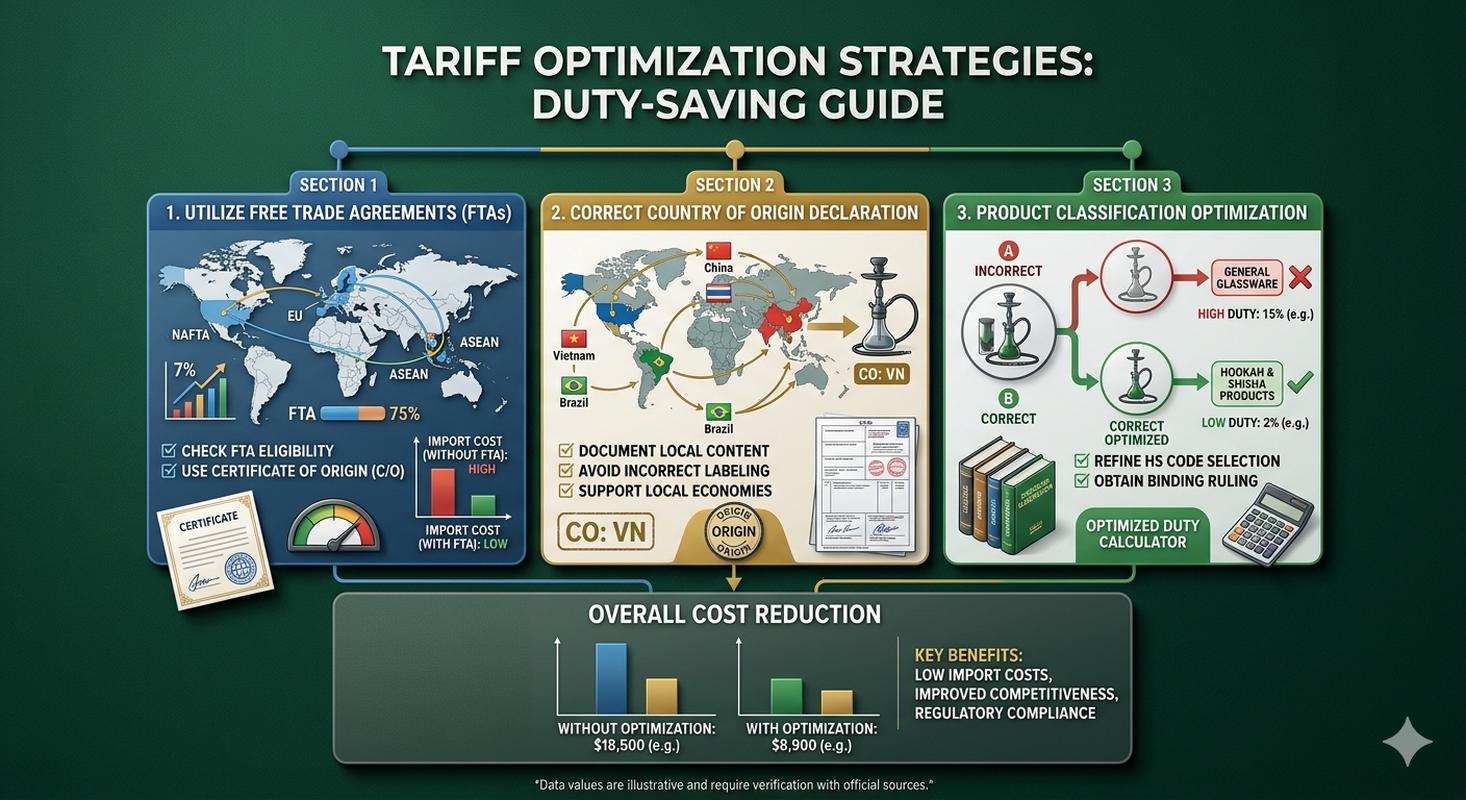
- Free Trade Agreement (FTA) Certificates of Origin. If the market to which you export has a bilateral or regional FTA with China, a (Form E for ASEAN, Form F for Chile, Form P for Pakistan) Certificate of Origin can result your duty being reduced to zero, or almost zero. It is the most influential strategy in tariff mitigation. You should ensure your stainless steel item satisfies the FTA criteria of rules of origin (which, in most cases, it means getting at least 40% regional value content or meeting a tariff-shift requirement).
- Bonded warehousing. When you import your stainless steel hookah components into a bonded warehouse, you pay no duty until the products enter the domestic market. If you send the goods to a third country, duty is never paid. This option is great for distributors using a central warehouse to cover multiple markets, like Dubai or Singapore.
- De minimis / low-value shipment relief. In the USA, products valued less than $800 (de minimis threshold) enter the country duty-free. While this may not apply to the full container loads, it is a viable option for sample orders, small batch test runs, and replacement parts. For the EU, the de minimis threshold is €150. As with the USA, splitting larger orders into multiple sub-€150 shipments is likely to be viewed as a single shipment by customs, and thus compliance will be at risk. Therefore, use this option with care.
- Correct HS Code classification. While it is simple, many importers end up overpaying by accepting their supplier’s suggested HS Code without verification. For the more cost-effective option, utilize a customs broker with expertise in importing goods from China, or use the CROSS (Customs Rulings Online Search System) database to view the binding rulings for similar goods. This single class change will result in duty savings of 10-15%.
- Country-of-origin planning. If you are looking to diversify your supply chain, consider sourcing your stainless steel hookah components from a country that has a lower tariff (i.e., Vietnam, Thailand, or Taiwan instead of China). While the Chinese production of hookah component manufacturing is the most dominant, a secondary-source supply for products that have high tariffs is becoming commonplace among the larger importers.

Best Practices for Compliance and Documentation
Successfully navigating tariffs and trade barriers is an ongoing effort. Global customs officials are becoming more stringent regarding all types of imports from China, including imports of stainless steel hookah hardware.
The following documents must be retained:
- A commercial invoice which includes as a minimum a detailed description of the products being imported, HS Codes (6 digits minimum) and the country of origin certification
- A packing list that shows the exact weights and quantities of each SKU
- A Bill of Lading or Air Way Bill
- A Certificate of Origin (for Free Trade Agreement preference claims)
- Material Test Certificates that show verification of stainless steel grade (304 vs 316)
- A manufacturer’s declaration of non-subsidized pricing (for anti-dumping audits)
Assuming a Chinese supplier’s export classification will be accepted by your home country is a mistake you want to avoid. Chinese export HS Codes will be more general than what the destination country’s import classification requires and therefore may not be correct. Always check the import classification with a customs broker before making a purchase. Taking this simple step can save you unexpected duties and penalties that may be substantial.
Related Products from Linkup Hookah
Linkup Hookah provides a comprehensive range of stainless steel hookah parts and finished items for B2B customers. Below are some product samples that reflect the standards and quality of this article:
- Linkup Premium 304 Stainless Steel Hookah Bowl, precision, standard replacing grommetss
- Linkup Stainless Steel Hookah Stem Assembly (30cm–80cm), available with custom HS Code supporting documents
- Linkup Hookah Base Fitting Kit, fully stainless steel, corrosion resistant, best for lounge volume orders
Conclusion
While different nations have different tariff rates and trade barriers, that shouldn’t discourage you from beginning a stainless steel hookah importing business. You can classify your goods, use FTAs to your advantage, and partner with a supplier who provides the right documents to greatly reduce the risks associated with hookahs imported from China.
At Linkup Hookah, our B2B partners can benefit from our HS Code guidance service, Certificate of Origin assistance, and our modular products service to get hooks (pun intended) around tariffs. Looking forward to hearing from you regarding your next import needs.
Frequently Asked Questions
What are the rates for importing stainless-steel hookahs to the US?
When importing hookah parts from China, the base rate (0-3.9%) along with Section 301 additional duties (7.5%-25%) combined—for a total landed duty range of 7.5% to 28.9%. This range will vary based on the specifics of HS Code Classification; for a definitive answer, speak to a licensed customs broker for a product specific classification
What are the rates for importing hookah parts to the EU?
Yes. EU anti-dumping duties for China stainless-steel tube and pipe fittings fall between 13.8% to 25.3%. While finished hookah products falling under CN 9614 are not subjected to anti-dumping duties, they will incur the standard EU customs duty of 8% to 12%.
Can I avoid Section 301 tariffs by importing from a third country?
No. Transshipment through countries such as Vietnam and Thailand will not avoid US tariffs due to the Country of Origin rule. Using transshipment to avoid tariffs incurs penalties, and potential seizure of the goods, as well as potential criminal liability.
What HS Code will I use for hookah stems?
HS 9614.00, which covers smoking pipes and bowls, and HS 7326.90, which covers other fabrication of stainless steel articles, are the most accepted classifications for hookahs. Variances in rulings may occur country by country, so always consult local customs for classification. An improper classification may trigger an audit and potential penalties.
How does Linkup Hookah help with tariff compliance?
Linkup Hookah partners with manufacturers to provide detailed product specifications, certifications for components and materials, and help with HS Code placement for all stainless steel items. We partner with B2B clients to provide required documentation for FTA preference claims, anti-dumping reviews, and customs clearance guides.