


- Chapter 1: Public Liability Insurance
- Chapter 2: Property Insurance — Protecting Your Physical Ass
- Chapter 3: Product Liability Insurance – Coverage for What Y
- Chapter 4: Additional Coverages Worth Considering
- Chapter 5: Choosing the Right Coverage for Your Lounge
- Chapter 6: Red Flags to Watch For in Insurance Policies
- Fazit
There are many risks that come with running a shisha lounge. Hot hookah coalss can cause fires, staff members and customers can accidentally break glass bases, and equipment can become expensive to replace. Aside from the dangers involved in running a lounge, the equipment can malfunction and cause customer complaints. Despite the many risks involved, many lounge owners pick the cheapest general liability insurance and do not bother to assess the coverage.
Standard business insurance includes many gaps that leave shisha lounges very vulnerable. Fire can start from a dropped charcoal cube. A customer can also claim they are having an allergic reaction due to the tobacco you provide. A broken glass base can also injure a guest. All of these scenarios are actually possible. All of these situations can also damage a lounge due to the lack of proper coverage.
This article provides a breakdown of the three public liability, property, and product insurance. It also breaks down the other major additional protections that will cover your business and prevent your business from failing.
Chapter 1: Public Liability Insurance
This is the most important coverage shisha lounges will need. It ensures you will be insured when a third party who is a customer, a vendor, or a delivery driver is injured or has their property damaged.
1.1 What Public Liability Covers for a Shisha Lounge
For a shisha lounge, public liability generally includes:
- – Slip-and-fall incidents. A customer trips and falls after stepping on a lounge Wasserpfeifenschläuche. The policy covers the customer’s medical bills and the lounge’s legal fees.
- – Burn-related injuries. A customer uses a lounge coal-stove and suffers a burn. Public liability covers the injury claim.
- – Property damage. A customer’s shisha loses a glass and breaks the customer’s contact phone. The cost to replace the contact phone is covered.
- – Accidents occurring on the premises. A patron is injured after a lounge shelf breaks. The lounge will cover the injury.
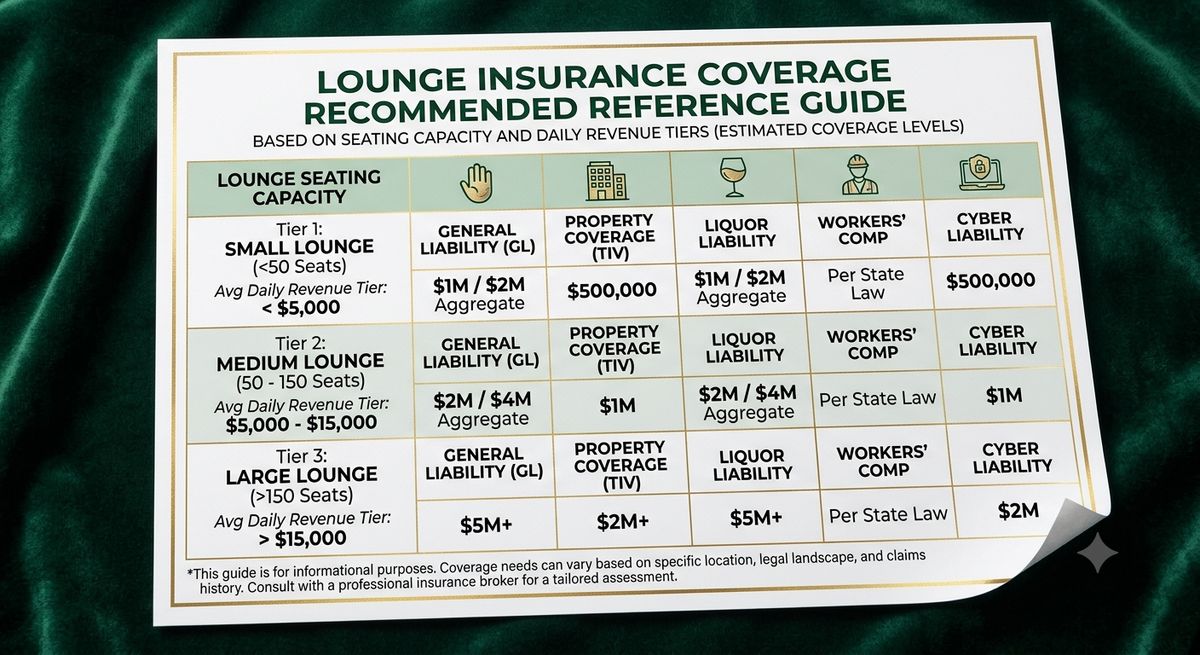
Most standard policies in this category offer between $1 million and $2 million in coverage per occurrence. For a shisha lounge, this maximum amount should be set to at least $2 million per occurrence, due to the higher risks of injury from burns and fire, when compared to standard cafes or bars.
1.2 Common Gaps in Standard Policies
Shisha Lounge owners find their policies do not cover some incidents, or have gaps. These include the following:
- Charcoal and open flame exclusions. Some shisha lounge policy clauses mention hookah charcoal to be an open flame. Therefore, they may decline to cover burning injuries unless specifically added to the policy wording. This should be asked for in writing if your policy covers hookah operations involving live coals.
- Intoxicated customer carve-outs. Some policies will deny coverage if the patron was injured and is obviously intoxicated. Your policy should cover all patrons regardless of intoxication status.
Equipment Damage to Third Parties: If a defective hookah stem snaps in a way that injures a customer, would it fall under a claim of public or product liability? This distinction needs to be clarified with your broker.
When reviewing an insurance policy for a shisha lounge, make sure to ask, “Are burn injuries caused by the hookah coals covered, and what specific exclusions are related to the hookah business operations?” If you cannot get a satisfactory answer, it’s time to continue your search.
1.3 How Much Coverage Is Enough?
For a medium shisha lounge with 15–30 tables, it is suggested to get $2 million for each occurrence/$4 million for the total policy. If your lounge is in a more litigious place, such as the US, Canada, Australia, or in parts of Europe, then consider either $3 million for each occurrence or obtaining a commercial umbrella policy.
Chapter 2: Property Insurance — Protecting Your Physical Assets
Property insurance covers the physical assets of your shisha lounge: your building, if you own it, your hookah inventory, your furniture, your HVAC system, your lighting, and your supplies. For a lounge that may have $20,000 to $100,000+ in hookah equipment, this is an essential policy.
2.1 What to Insure in a Shisha Lounge
You should take a complete account of everything that would need to be replaced if damaged or lost due to either a fire, flood, theft, or vandalism:
- Hookah inventory. Premium stainless steel hookahs from brands like Moze, Steamulation, MIG, and Alpha can cost $150-$600 wholesale. A lounge that has 30 hookahs has close to $4,500-$18,000 in hookah inventory alone, not including the other supplies such as hookah bowlss, HMDs, hoses, and mouthpieces.
- Glass bases: Hand-blown custom glass bases each cost $20-$100. They are fragile and are typically damaged in incidents first. *Furnishings and fixtures*: Lounges spend substantial amounts of money on attractive, welcoming, and comfortable seating, lighting, and decor. The total fixtures and furnishings in a lounge can cost between $30,000-$80,000. *HVAC and ventilation*: Powerful ventilation systems are a requirement for commercial hookah lounges. Commercial grade ventilation exhaust systems cost between $5,000-$15,000.
- Charcoal and tobacco inventory: An average bulk buyer can hold between $2,000-$10,000 of stock at any time. Tobacco and charcoal have particular storage requirements. Insurers may request to inspect the inventory.
2.2 Replacement Cost versus Actual Cash Value
This is the most critical decision in property insurance. Replacement cost coverage pays for the replacement of damaged items with like kind and quality at current cost. Actual cash value (ACV) pays for depreciation of the item.
For covering a shisha lounge, replacement cost is strongly suggested. A hookah that is three years old may cost $300 but, under ACV, may only be $100, whereas the like kind and quality replacement may cost $320. The $220 difference in cost is borne by the insured. The price difference for replacement cost versus ACV is typically only 15%-25%, making replacement cost a best value decision for coverage.
2.3 Business Interruption Coverage
Business interruption coverage is a separate, but essential, type of insurance that is added to property insurance. If your lounge needs to shut down for weeks or months, following a fire or water damage, this add-on helps to pay for incurred fixed costs, such as rent, payroll, and loans, in addition to replacing lost revenu
Given that a shisha lounge can earn between $15,000 and $50,000 or more, a two-week closure can result in a substantial financial loss. Although business interruption coverage increases your property insurance premium by 15-20%, it could prevent you from having to shut down for good.
 Chapter 3: Product Liability Insurance – Coverage for What You Serve
 Chapter 3: Product Liability Insurance – Coverage for What You Serve
Product liability insurance is coverage for shisha lounges that most lounge owners completely ignore. It protects you if any product that you sell or serve results in injury to your customer. In the case of a shisha lounge, this insurance would cover the injury resulting from shisha tobacco or branded shisha lounge accessories that you sell.
3.1 Why Shisha Lounges Need Product Liability
If a customer suffers a health problem from your shisha tobacco, such as an allergic reaction or anxiety, product liability insurance would cover the legal costs of your defense as well as any settlement or judgment. It would also cover claims that arise from the following problems:
- Stale or Contaminated Tobacco. In the case of improperly stored tobacco, mold could develop and result in a claim.
- Accessories with Defects.If an accessory, such as a heating management device (HMD) or bowl, injures a user during use due to a crack, it would fall under a product liability claim as opposed to a public liability claim.
- Mislabeling or Missing Warnings For example, a client can claim that they were not adequately notified about the shisha nicotine content or other ingredient concentrations.
3.2 The Hookah Supply Chain and Your Responsibility
Some lounge owners think that because they buy products from B2B suppliers, those suppliers take on the product liability. However, that’s not the case. In nearly all jurisdictions, all parties in the supply chain — manufacturer, distributor, and retailer — are liable in a product liability case. As the lounge owner selling the product to the end customer, you are the primary target.
The risk you take on as a lounge owner when selling hookah products is less with a B2B partner like Linkup Hookah, whose sources are certified and reputable. A quality hookah, a well-designed Oblako Phunnel Bowl, or a certified HMD like the Kaloud Lotus III is more unlikely to fail. While the risk is lower, it is still there, and thus, you will still need to obtain product liability insurance.
3.3 Coverage Limits and Scope
For a single-location shisha lounge, $1 million per occurrence with a $2 million aggregate is a common starting point for product liability. Multi-location operations should scale up accordingly. Product liability is typically packaged with public liability in a general liability policy, but you should verify that tobacco-related products are explicitly covered rather than excluded.
Ask your broker: “Does my general liability policy include product liability coverage for the shisha tobacco and hookah accessories I sell?” If the policy has a food-and-beverage exclusion that’s ambiguously worded, tobacco might not be covered.
Chapter 4: Additional Coverages Worth Considering
In addition to the three primary coverages, there are a number of policies that can cover additional risks that are associated with shisha lounges.
4.1 Equipment Breakdown Coverage
Specialized equipment that lounges rely on includes not only ventilation fans, charcoal burners, ice crushers, audio systems, and refrigeration, but also commercial equipment used in the daily operation of a lounge. Equipment breakdown coverage (also called boiler and machinery insurance) provides insurance for mechanical and electrical equipment that fails as a result of a mechanical breakdown, electrical arcing, or employee error.
An equipment breakdown policy is very relevant for a lounge that operates commercial electric charcoal burners. If a burner fails in the middle of a service, this can be disruptive to the entire operation.
4.2 Workers’ Compensation
In most jurisdictions, workers’ comp is a legal requirement if you have employees. For shisha lounge employees, some injuries may come from contact with the burning coals used in the hookah, from the strain of carrying hookahs, or some may be slip and fall claims resulting from coal burns in the service area. Workers’ compensation policies are rated to ensure coverage for staff, and in the event that an employee takes legal action, the policy provides protection for the employer.
4.3 Cyber Liability
This coverage addresses the costs of responding to a data breach and notifying customers, as well as legal costs of data breaches. Since shisha lounges are increasingly implementing digital POS systems and online order systems, this coverage is of added relevance.
4.4 Liquor Liability (if Applicable)
When your lounge adds hookah to its offerings, you need liquor liability coverage. Because this coverage is often excluded from standard general liability policies, it must be added by endorsement. Even if you generate a low amount of sales from alcohol, the liability risk persists.
Chapter 5: Choosing the Right Coverage for Your Lounge
 Chapter 5: Choosing the Right Coverage for Your Lounge
5.1 Work with a Broker Who Knows Hookah
Not all insurance brokers can empathize with the hookah business. Those with experience in shisha lounges will ask questions like handling of charcoal, ventilation, tobacco storage, and of course, the various liabilities that come up with hookah. When you meet a potential broker, you must ask, “how many shisha lounges have you underwritten?” If the answer is none, that broker is also none.
5.2 Examine the Exclusions
Charcoal/fire exclusions. Charcoal often comes with items that are burned. Are hookah coals excluded or limited by the policy when combusting with hookah charcoal?
Tobacco exclusions. Does your product liability coverage include the serving of shisha tobacco?
Equipment exclusions. Are hookahs and all of the items that come with them excluded as business equipment and therefore consumed?
Flood and earthquake. These are almost always excluded in generic business policies and need to be added specifically.
5.3 Bundle Where Possible, but Verify Coverage
Many package policies involve public liability, property, and product liability policies. When purchased separately, policies cost more. Buying policies together saves money. This works for you only when combined policies provide coverage for all three components. Do not believe that a “business owner’s policy” includes all three. Business owners policy definitions and declarations should be provided to you, and you should request your broker put in writing all hookah risks are covered.
5.4 Review Your Coverage Annually
There is only one constant in business, and that is change. Each year your business undergoes a transformation requiring a review of your insurance. Expanding your business requires more coverage, and adding new tables or locations, new products, or renovations all change your risk profile. Conduct an annual insurance review to update coverage limits and add assets to your property schedule. Adjust your liability limits in proportion to your business revenue.
Chapter 6: Red Flags to Watch For in Insurance Policies
Look for these red flags when reviewing policies:
Language about hookah operations that is not explicit. Policies that do not specifically mention shisha, hookah, charcoal, etc. are likely to contain a generic exclusion. Request the language in writing.
Sub-limits on property that are low. For example, a policy that says the coverage for “breakables” is limited to $5,000 or $10,000 is not enough to allow a lounge’s glass base and hookah inventory.
No coverage for business interruption. Coverage of your property and no coverage of your lost income means you are exposed to the greatest cost of loss the business is unable to operate.
Insurers’ non-renewal clauses on hookah-related claims. Some insurers non-renew shisha lounge policies after one claim due to an internal negative claims experience guideline. Check with your broker on the insurer’s claims experience with hookah-related businesses.
Defense costs not covered Some product liability policies reimburse settlements and judgments but do not cover legal defense costs. In some cases, defense costs can be greater than the settlement, making this a key consideration.
Fazit
Leaving your insurance arrangements to the lowest bidding provider is not a viable option. A well-designed shisha lounge insurance policy could prevent what would be a financially catastrophic event.
Your starting point should be the three primary covers of public liability, property, and product liability. You can then tailor the product offering to suit your specific shisha lounge. Ensure you have a robust insurance broker who understands the hookah industry, carefully review Exclusions, and renew your insurance policy annually. A good policy will not only protect your assets, but your staff and customers.
*Linkup Hookah offers B2B wholesale premium hookahs and tobacco for lounges looking to get theirs right from the start and protect customers along the way. Constant premium supply and reduced risk help lounges thrive temporally confident. Browse LinkupHookah.com to get started with some quality stock (e.g. Oblako Phunnel Bowls with heat management devices). We know the worth of investing in the right premium hookahs, accessories, and tobacco.*