

- Why Shisha Lounges Face Elevated Fire Risks
- Fire Extinguishers and Shisha Lounges
- Fire Safety for Hookah Charcoal; Handling, Storage & Dis
- Electrical Safety: Circuits, Overloads & Coal Burners
- Evacuation Routes: Signage, Drills & Compliance
- Staff Fire Safety Training- Human Aspect
- Knowing Your States Regulations Regarding Hookah Bars
- Recommended Safety Equipment for Your Shisha Lounge
- Fire Safety Tips for Your Shisha Lounge
Commercial shisha lounges have challenges that don’t affect bars and cafes. One of these challenges is fire safety. The open flames of the charcoal burners combined with the combustible furnishings and the way a hookah bar invites a lot of people to occupy a small area requires attention to fire safety from the very beginning.
Preparing for the fire safety of your shisha lounge is not simply going through the motions for an inspection. It is ensuring the safety of your customers, your employees, and the livelihood you have worked to build. The devastation caused by a single fire can result in a total loss of inventory, lawsuits, loss of your venue, the cancellation of your insurance, and a complete shutdown of your business.
This guide will help you comply with all fire safety regulations with information on shisha lounge insurance, planning for evacuations, charcoal management, and placement of extinguishers.
Why Shisha Lounges Face Elevated Fire Risks
Before discussing safety equipment and codes, it is important to understand why fire marshals and insurance underwriters consider hookah lounges to be different from typical restaurants and bars.
Charcoal Hazard
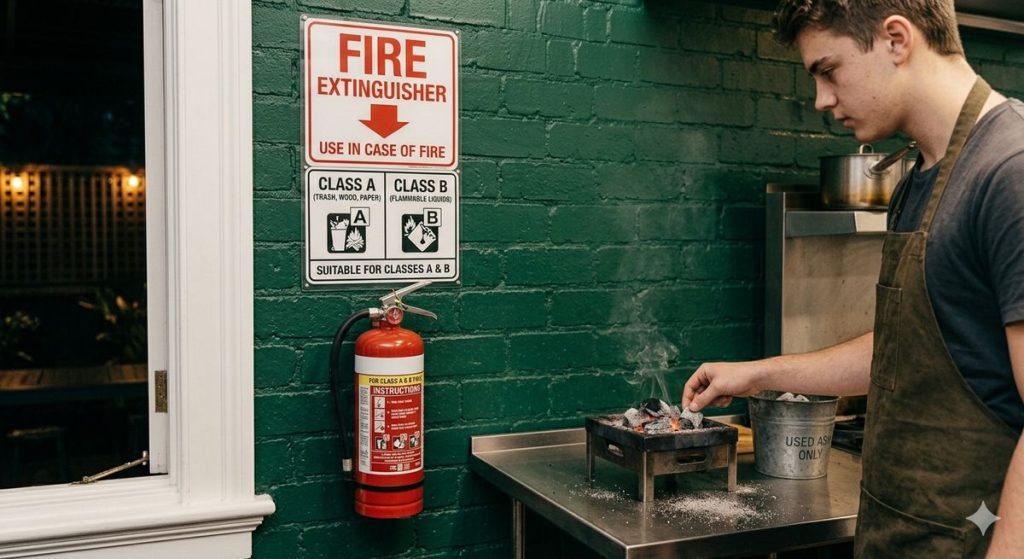
Hookah charcoal can reach a burning temperature of up to 700 °C. Coals that light quickly can burn at even higher temperatures. TWasserpfeifenschläuche coals are physically moved from place to place. They are even thrown away while still burning. Coals can fall off and be lost in furniture or carpet and can burn for several minutes without anyone knowing.
For these reasons, the safety precautions for treating burning hookah charcoal should be the greatest operational concern for all shisha lounges. Equipment, procedures, and training should revolve around using dozens of small and unattended burning heat sources.
High Exposure + Low Illumination
Most shisha lounges have low mood lighting and can be at capacity on the weekend. This means that there can be a lot of patrons in a low visibility area containing several burning objects. All of this combined will inhibit detection of a fire and lengthen the time it takes to evacuate. This means that fire safety systems and procedures should be designed for these conditions.
 Fire Extinguishers and Shisha Lounges
 Fire Extinguishers and Shisha Lounges
Having the right fire extinguishers in the right locations is the most important thing to make shisha lounges safe. There are three things to consider when providing the right fire extinguishers in shisha lounges: the type of fire extinguishers, the locations where fire extinguishers are placed, and the level of service and maintenance fire extinguishers receive.
ABC Class Fire Extinguishers
Every commercial space is required to have a multi-purpose ABC dry chemical fire extinguisher. A rated fire extinguishers can put out daily burnable materials like wood, paper, or fabric. B rated fire extinguishers can put out burning liquids like hookah tobacco and alcohol. C rated fire extinguishers can put out burning electrical materials like cords and wall outlets.
Every fire class applies to hookah lounges. One example is bringing a burned chair up to a class A fire. A class B fire would be a cleaning chemical dangerously sitting next to a hookah bowls wash. As for a coal-burner power strip, that would be a class C fire. For any of these scenarios, ABC extinguishers would apply.
Placement: Every 300 Square Feet
In commercial occupancies, The National Fire Protection Association (NFPA) says that fire extinguishers should be placed to make sure the distance to one does not exceed 75 feet. For shisha lounges, the more applicable and typically suggested way would be to have one extinguishers for every 300 square feet. Beyond that rule, there should be one fire extinguisher for every designated charcoal-handling area, and this should be placed within 20 feet of the area.
Extinguishers should never be blocked or covered, as it should be easily accessible. Extinguishers need to be placed between 3.5 to 5 feet of the ground on wall brackets or in marked stands with the stand placed between the wall brackets and the stand.
Monthly Inspection List
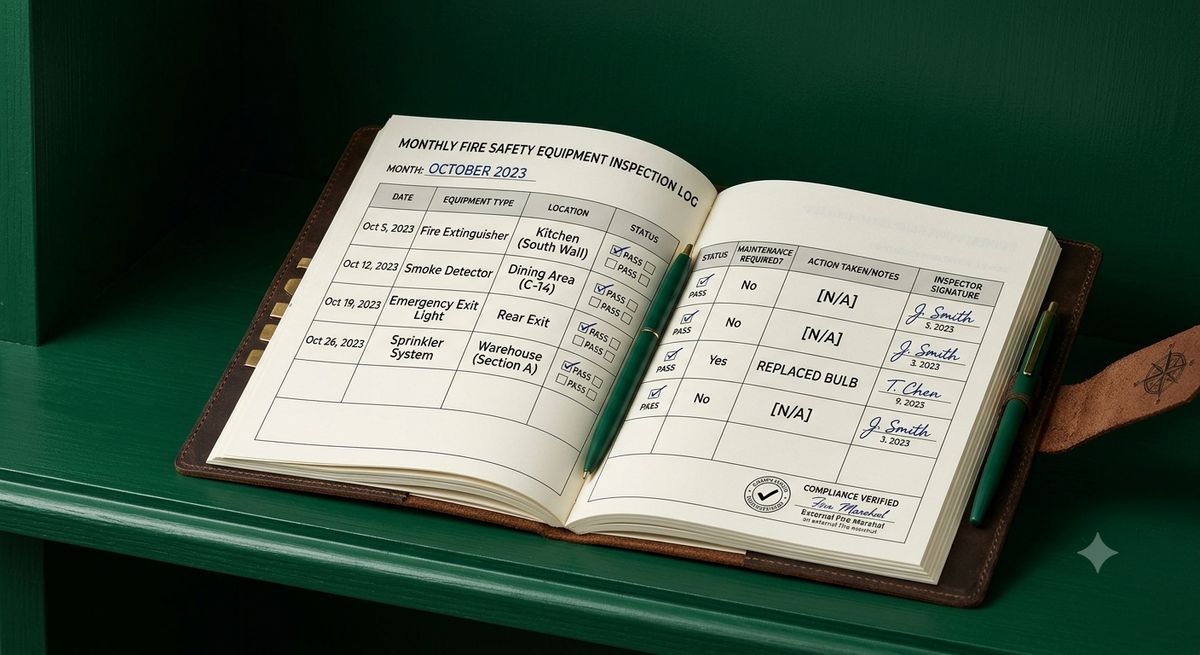
Fire extinguishers need to be visually inspected once a month. These inspections should contain:
An ensured unobstructed stand in the designated area.
An ensured pressure is in the green operational zone.
An ensured unbroken seal and pin.
An ensured label is clear and oriented to the external side.
An ensured unbroken seal and pin.
An ensured absence of any of the possible damage: rust prevention, corrosion, denting, or an obstructed nozzle.
And finally, there needs to be a documented signature and date.
Apart from your regular monthly inspections, a certified fire protection technician should do a professional analysis of your system’s components once a year. On top of that, a hydrostatic pressure test will be conducted every 5 to 12 years depending on your fire extinguisher type.
Fire Safety for Hookah Charcoal; Handling, Storage & Disposal
A Shisha lounge’s main offering is enticing but smoldering charcoal. It is the biggest and most dangerous fire liability. A charcoal fire safety plan is meant to deal with how charcoal is stored before use, how it’s managed and served, and how it is disposed of safely after service.
Storage Rules
Charcoal stored in bulk should be kept in the well-ventilated storage area (charcoal storage area) separate from the lounge area. Charcoal should be stored in metal containers/bins. Charcoal should not be kept near water heaters, furnaces, electrical panels, and other sources of possible ignition. In the storage area, a “No Smoking” sign should be displayed.
Quick-light charcoal is pre-soaked in lighter fluids. It should be housed in a sealed container away from natural coals to prevent vapor accumulation. Some places prohibit and restrict quick-light coals in commercial areas. Be sure to follow your area’s hookah bar fire regulations.
Handling Charcoal Station
A hookah lounge should have designated charcoal handling stations that have a non-combustible surface (stone or metal) that are located away from any flammable items such as curtains and cleaning supplies, as well as customer seating. These stations are where coals will be lit, transferred, and brought to tables to be served.
It is suggested to purchase a heavy duty metal coal burner. (see product suggestions).
- – Disposable coal bucket with a metal lid. Must be airtight.
- – Metal tongs with a long handle for hot coals.
- – ABC fire extinguisher. Must be installed within 10 ft.
- – Trivet under each burner as secondary protection, or a heat-resistant mat.
For charcoal burners of the highest quality, and safety equipment aimed at designated commercial shisha lounges, take a look at our professional hookah coal management products. Buying the right products lessens the chance of an accidental fire.
End of Night Coal Disposal
When closing, take the used coals and dump them in a special metal container with a lid. Used coals must never go in regular waste bags or bins. To ensure they have extinguished completely, dump some sand or water in the container, then leave it somewhere safe and non-flammable. The best place to leave it is outside and at least 10 ft away from the building. This container can be disposed of the next day.
Never make the assumption that a coal is cold. Closing staff must be trained to never make this assumption. Even coals that look cool and black can be extremely hot on the inside and can stay that way for a long time. The only way a coal can be deemed safe is if it has sit in sand or water for at least 12 hours.
Electrical Safety: Circuits, Overloads & Coal Burners
Shisha lounges have a modern approach that sees each coal burner electrically lit to ensure consistent burning of the coal. This practice however comes with the danger of drawing 1,000-2,000 watts per coal burner. Plugging several burners to the same circuit is both common and dangerous.
Dedicated Circuits for Coal Burners
If your lounge runs three or more electric coal burners at the same time, it’s best to have each one on a separate circuit. At the very least, don’t run a coal burner on the same circuit as other equipment that draws a lot of current such as a fridge, ice machine, HVAC equipment, or sound systems. Blowing a circuit is the least of your worries because it generates heat that can burn through wire insulation. This can lead to hidden, hard-to-find fires.
Extension Cords and Power Strips
Coal burners should not be combined with extension cords. If a burner must be moved, it is acceptable to use a temporary extension cord that is at least 15 amps, 12-gauge, and marked as “heavy-duty.” These cords should not be used permanently. Permanent use of cords must be hardwired.
Sustained high-wattage loads present serious fire risks, and as such, coal burners must be used with great caution. They cannot be used with power strips that are meant to have surge protection. Reserve power strips for devices that draw little power, such as phone chargers, hookah hoses that have LED lights, and registers.
GFCI Protection
To meet most commercial building codes, and for your safety, all outlets within 6 feet of a sink, wash station, or wet prep area need to have GFCI protection. This is especially important in a shisha lounge since water, juice, and hookah wash liquid are all handled often.
Evacuation Routes: Signage, Drills & Compliance
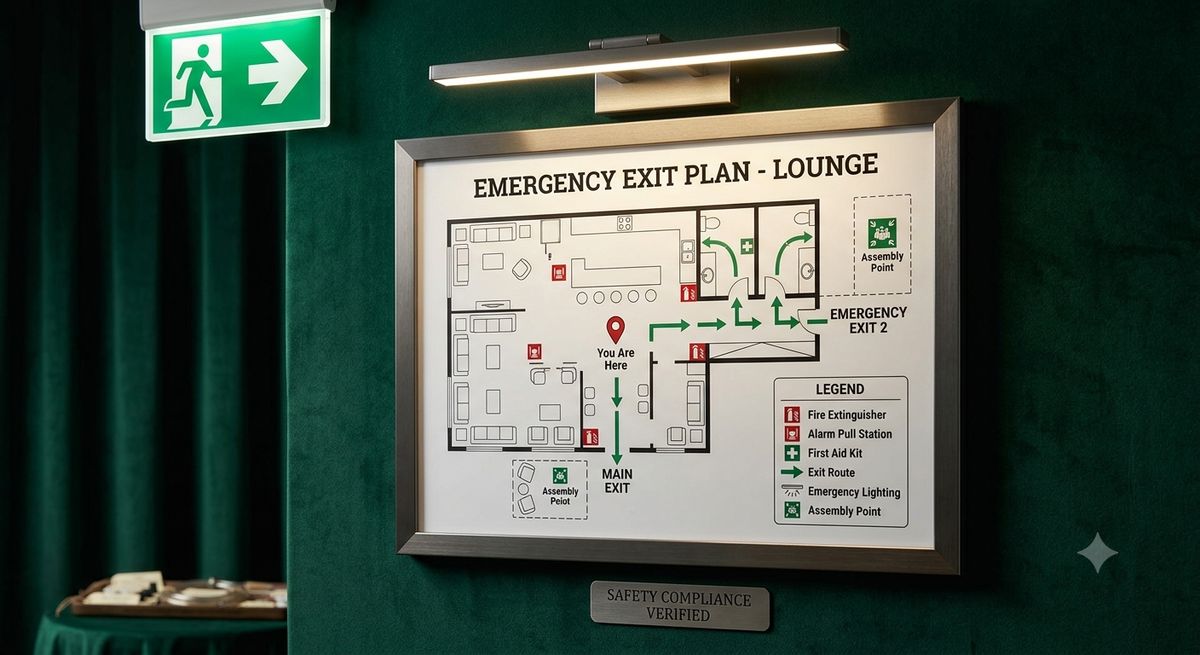
When fire alarms ring in dimly lit, overcrowded spaces like shisha lounges, patrons need clear, direct, and unobstructed paths to exits. Egress laws for shisha lounges go beyond just ensuring exits have doors that open outward.
Signage and Emergency Exit Lighting
All exit doors must have illuminated exit signage where they can be approached and seen. Emergency lighting must be installed along egress paths and should light when the main power supply is interrupted. This is a requirement of NFPA 101 (Life Safety Code) and is a requirement for most local hookah bar fire code laws.
Emergency lights should be tested monthly, and batteries should be replaced once a year. A log of tested emergency lights should be kept on the premises for fire marshal inspections.
Evacuation Drills
While quarterly evacuation drills may not be mandated by the jurisdictions of most shisha lounges, it is a life-saving requirement. Employees must know the proper steps and where to safely guide guests in the event of an emergency.
At least once every quarter and on every shift (opening, closing, and weekend crews) evacuation drills must be conducted.
Drills must include:
- – Announcing the emergency and guiding guests toward exits.
- – Checking if restrooms are clear and remaining occupants in backrooms.
- – Shutting off coal burners and gas valves.
- – Counting every guest and employee outside and at the meeting point.
- – Ringing 911 and stating the address and reason for the emergency.
Observe each drill with the date, start and end time, duration, attendees, and concerns if any. These records assuage concerns for insurance providers and show the effort you spent in the event of an occurrence.
Maintaining Clear Pathways
Egress routes should be a minimum of 3 feet in width and should never be obstructed. This entails never having stored hookahs, charcoal containers, extra furniture, cleaning carts, etc. in the passageways and doors leading to exits. Ensure you regularly conduct a walkthrough, ideally one each day, to check egress routes.
Staff Fire Safety Training- Human Aspect
Equipment and signage are ineffective if your personnel do not know how to utilize them. Therefore, fire safety training is a prerequisite for each employee during the onboarding and should be repeated every subsequent year.
Hands-On Extinguisher Training
Employees should not be merely told where the fire extinguishers are. Staff should be brought to the facility for a hands-on training. Studies that have been conducted show that staff have a higher probability of using a fire extinguisher correctly when they’ve been trained on the location of the extinguishers.
Staff should be trained to:
- – Understand the sound of the fire alarm and know which direction their exit is located.
- – Identify the nearest fire extinguisher in the room they are located in.
- – Make the right decision on whether to fight a fire that is small, or a fire that is large and would require immediate evacuation.
Know where the buckets are located for the disposal of charcoal and where the emergency shut-off switches are. Know the dangers for a fire specific to a shisha lounge. These include unattended hot coals, burnt or frayed electrical cords, and flammable liquids sitting next to heat sources.
All training sessions must be documented, and the documented sessions must be kept for no less than three years. Sign-in sheets are one example of documentation. Fire marshals, as well as your lounge’s insurance provider, will request the training documentation during their audits.
Insurance for Shisha Lounges: Fire Insurance
It is a legal and financial necessity to carry a proper shisha lounge. Fire insurance will be necessary. Standard business owner’s policies (BOPs) typically do not cover fire-related damages to hookah lounges because underwriters classify the burning coals as an increased risk.
Minimum Fire Insurance Needs
A shisha lounge must have, at a minimum, the following:
- – Commercial property fire insurance for the lounge with the building, fixtures, furnishings, and stocks. Coverage must be equal to the full replacement cost of the property, as that coverage is a requirement of landlords and banks.
- – Business interruption insurance, which covers loss of income from interruption of business from fire. It is often the difference between a permanent shutdown and a return to business after a brief interruption.
- – General liability insurance which also covers fire damages caused to a third party’s property, such as a neighboring property in a strip mall.
- – Workers’ compensation insurance for employees’ injuries from the fire or from the fire evacuation.
Tips to Reduce Your Insurance Premium
Insurance companies appreciate risk mitigation. Keeping a record of the compliance of your shisha lounge with fire safety, such as logs for inspections of fire extinguishers, records of fire safety training for employees, documentation of fire evacuation drills, etc., can help you save 10% to 25% on your premium with various insurance companies. Some insurance companies may provide you with more savings on the installation of more fire protection measures, such as auto fire sprinklers, kitchen hood fire extinguishing systems, and fire alarm systems with monitoring.
When you apply for shisha lounge insurance, tell the truth about your business. If you lie and say your business is a standard cafe or bar and your business is not, you may have a denial of insurance coverage when you need the insurance coverage the most.
Knowing Your State’s Regulations Regarding Hookah Bars
Fire codes have a lot of variation throughout the country, even more so throughout different states. While the NFPA has established minimum standards, many areas (particularly those with large numbers of shisha lounges) have implemented more specific regulations to address shisha lounges.
Examples of these regulations include the following:
Automatic fire sprinklers installed in lounges larger than a set number of occupants.
A required minimum spacing (for example, six feet) between hookah lounge tables.
Fire walls constructed between the lounge area and adjoining business areas.
A limitation or ban on the use of quick-light coals in the venue.
Live fire performances or flame hookah devices in the lounge area are only allowed with a special permit.
The fire safety plan must be approved by the local fire department prior to the issuing of a business license.
Before you open or renovate your shisha lounge, you must develop a relationship with your local fire marshal’s office. You should schedule a pre-inspection walk through. Most fire marshal offices are willing to come to your business to review your layout and the plans for your equipment before they conduct a formal inspection. The costs of making modifications to your space after an inspection fails are orders of magnitude more expensive than making the modifications in accordance with the pre-inspection suggestions.
Recommended Safety Equipment for Your Shisha Lounge
Purchasing safety equipment for your lounge is a wise investment. The safety equipment you should purchase breaks down into the following categories:
Commercial Charcoal Burners
Every shisha lounge should purchase a commercial electric charcoal burner with a stable, tip resistant base, an automatic shut off, and overheat protection. Basically, a commercial charcoal burner is built to withstand the demands of a shisha lounge and certified for safety and durability. Look through the selection of commercial shisha charcoal burners with continuous use.
Fire-Resistant Disposal Stations
A durable, heavy-gauge steel lid disposal container is necessary for a shisha lounge. Look for coal disposal buckets with a sand or water reservoir. Handles for safe and easy carrying are also a good indication of a quality product. Check out our coal disposal buckets and accessories.
Fire Blankets and Smoke Detectors
Fire blankets are a good way to suppress the clean dry chemical fire extinguishers. A fire blanket is very beneficial throughout the kitchen and coal-handling areas. A network of interconnected smoke detectors are required in almost all commercial areas. These items are cheap and greatly enhance your shisha lounge’s fire safety.
Fire Safety Tips for Your Shisha Lounge
Yes, meeting the safety standards for a shisha lounge continues past setting the initial safety standards. You can use this list to ensure you’re meeting safety standards.
- ☐ Monthly inspection of ABC fire extinguishers. A fire extinguisher for every 300 sq ft.
- ☐ Charcoal handling station with a metal container and lid.
- ☐ Charcoal burners with plugs on separate circuits.
- ☐ Monthly tests performed on emergency exit signage and emergency lighting.
- ☐ Evacuation drills held semi annually.
- ☐ Staff trained on PASS, fire extinguishers, and shisha fire safety.
- ☐ Fire safety employment policies purchased from a shisha safety company.
- ☐ Fire safety contact with the shisha safety company.
- ☐ Policy for disposal of burnt charcoal coupled with end of shift procedures.
- ☐ Training logs kept for three years.
Fire safety informs the structure of a lounge. Proper equipment, well trained staff, and compliance with the law ensures that Shisha Lounge owners can operate their businesses proactively and guests will be able to lounge with peace of mind.