


After a bustling Saturday night, two hookah bases take a seat on the counter. One looks clean, but a glass surface reveals every bit of residue. The other is an acrylic base. Outside, the acrylic is glossy, but inside is a faint stale odor of last week’s mint berry mix.
Your team has their trusty multi-surface cleaner in hand, as they do for tables and bar tops. Spray, scrub, rinse. A base is easy, and just a bit of streaking still shows nothing is damaged. An acrylic base is a different story. An acrylic base has a cloudy haze. With cleaning agents it will have new surface cracks. Done, ruined.
Lounge owners can observe this scene in various lounges. Staffs have never learned the differences of acrylic compared to glass. They are easy to confuse: style, use, and function seem the same. But they are not. What works well with glass will be the end of acrylic.
This article outlines the most crucial differences of acrylic compared to glass hookah bases, damages cleaning agents will cause to acrylic, and finally, step-by-step methods. After this is read, the team will learn not to use incorrect cleaners.
The Material Difference: Why Acrylic and Glass Are Not the Same
The first mistake they usually make is when lounge operators think acrylic and glass can be treated the same way. This is a misunderstanding that happens most often because glass and acrylic have some physical similarities. They are both transparent, they are both non-permeable, and both of them aesthetically please when displayed on a hookah. Other than that, they are chemically and structurally different. Therefore, the way that they need to be treated in order to clean them thoroughly differs.
Glass: Thermally Stable and Chemically Inert
Glass is a type of silica (sand) that has been heated and fused into a solid, finished product that is non-permeable and firm. Borosilicate glass (the kind of glass that is used for the majority of hookahs) has boron trioxide within its fused silica. It has thermal retaining properties. This is why base glass hookahs can even withstand near boiling water and thermal shock.
From a chemical standpoint, glass is almost inactive. It will not react with most of the solvents we tailor to cleaning, such as isopropyl alcohol, vinegar, and bleach. The only way glass will be damaged in the long term is from hard water (which can cause limescale prevention) or if it is accidentally physically broken.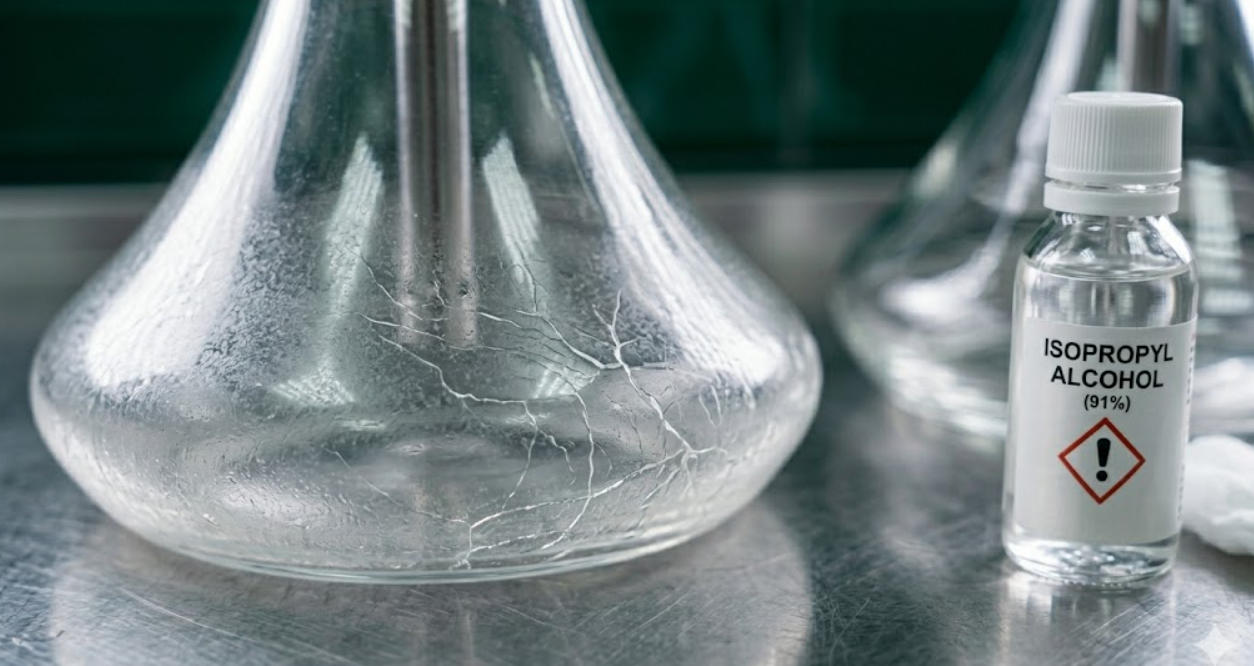
Acrylic: Lightweight but Chemically Vulnerable
Acrylic (polymethyl methacrylate, or PMMA) is a thermoplastic polymer. It is prized for its light weight — roughly half that of glass — and its impact resistance. A dropped acrylic base bounces or cracks rather than shattering into dangerous shards. That makes it popular for lounges that move hookahs between tables frequently.
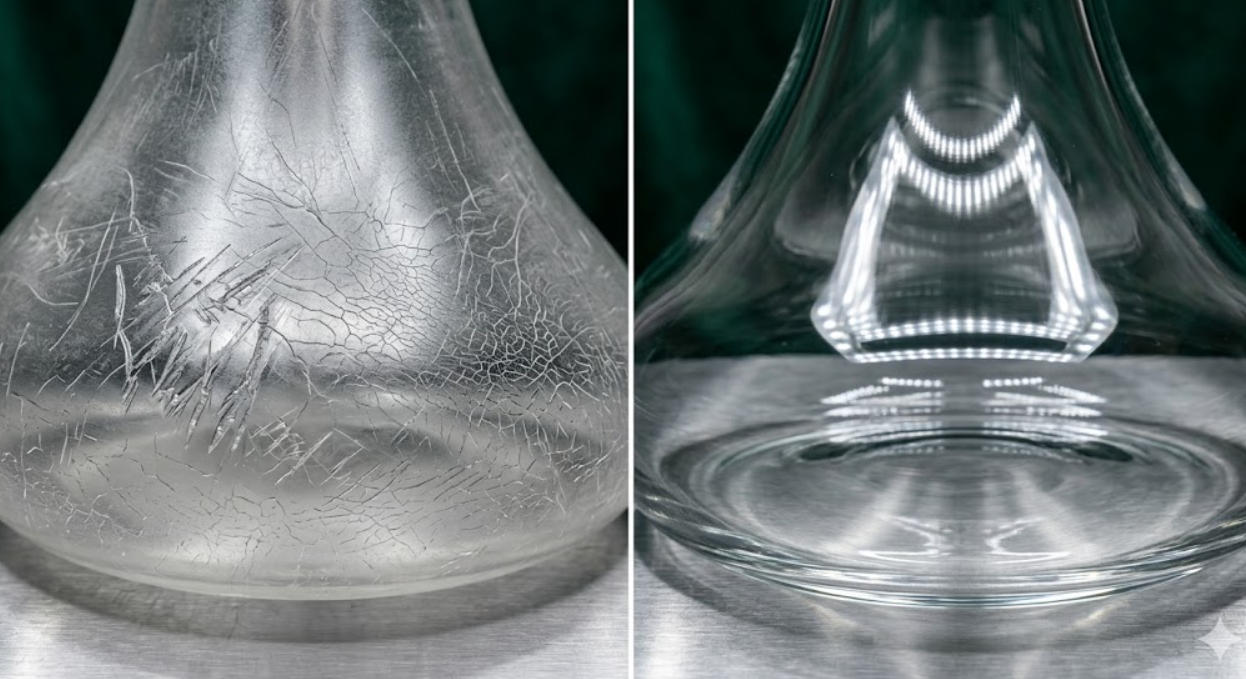
However, acrylic’s major drawback is its chemical sensitivity. Solvents that break acrylic’s long molecular chains disrupt its integrity. These include alcohol in higher concentrations (greater than 15-20%), ammonia, bleach, sodium hydroxide, acetone, MEK, and other xylene and toluene derivatives. These result in “crazing,” which is the network formation of fine surface cracks that scatter light and make acrylic cloudy.
When alcohol contact acrylic, It penetrates the first layer of the acrylic and causes swelling. Alcohol evaporates and the acrylic contracts. However, repeated swelling and contraction brings internal stresses to the acrylic. These internal stresses cause crazing. Crazes start off as a faint haze and over time become cracks.
Research shows that acrylic surfaces start to degrade after brief contact (30 seconds to 1 minute) with 70% Isopropyl alcohol (IPA). The acrylic surface is largely unharmed with IPA concentrations below 20%. However, the concentrations of alcohol in cleaning and disinfecting products are typically unlisted and are likely to be above this threshold. Most all-purpose cleaners with a high enough alcohol concentration to disinfect an acrylic surface will likely ruin the surface.
The Clear Enemy — Ammonia and Strong Bases
Windex and similar glass cleaning products are the main glass cleaners with severe acrylic surface damage. These cleaners contain ammonium hydroxide. Ammonium Hydroxide is a very strong base that is relatively safe on glass but cuts through acrylic polymer chains and etches the surface.
Bleach and a lot of oven and drain cleaners also fall into the same group of strong bases to acrylic. These cleaners will rapidly turn a clear acrylic surface opaque.
Abrasives — Physical Damage
Aside from damage caused by chemicals, physical damage also occurs as a result of abrasion. A poorly executed cleaning routine on acrylic using supply-grade scouring pads (Scotch-Brite, steel wool) creates micro-scratches, which yields an oxidized, cloudy appearance. Although this may be different from chemical crazing, ultimately they lead to an unappealing foggy base.
Unlike acrylic, glass is much harder (with a Mohs hardness of 5.5-6.5 as opposed to the 2-3 of acrylic) and successfully resists scratching from the surface-level damage incurred from scrubbing. In fact, a glass base would require you to use sandpaper in order to damage it, which shows how much more resistant to physical damage it is.
Correct Cleaning Protocol for Glass Hookah Bases
Glass bases breaks, but they are also forgiving. For a glass base’s cleaning is used as a lounge’s cleaning protocol, the following can be recommended:
Cleaning After Every Session
Empty The base should be completely emptied. The most common cause of biofilm and odor is stagnant water.
Rinse To remove water, use warm (40-50°C) water. For borosilicate glass, hot water may be used. However, avoid thermal shock.
Soap Add 2-3 drops of dish soap, then use a soft bottle brush to clean the interior. Be sure to clean the bottom of the base as well as the neck of the base.
Rinse To remove soap, rinse the base thoroughly using warm water. Soap residue retards the smoke and will create a lot of bubbles.
Dry Finally, using a microfiber cloth free of lint, dry the base. For these glass bases, a 50/50 solution of vinegar and warm water will eliminate water spots.
Deep Cleaning (Every Week)
- Fill the base with warm water and add 1 tablespoon of white vinegar or citric acid powder.
- Let it soak for 30 minutes and allow the limescale and mineral deposits to dissolve.
- For the limescale rings, use a non-abrasive sponge with a baking soda paste (3 parts baking soda to 1 part water).
- Rinse and dry thoroughly. Glass can also be sanitized with a 70% isopropyl alcohol rinse; just remember to rinse with water after.

What NOT to Do on Glass
The only thing you should not do to glass is thermal shock. Don’t pour boiling water into a cold glass base. Don’t plunge a hot base into cold water. Even borosilicate glass can crack under extreme temperature changes. Other than that, glass can be cleaned with almost anything.
Correct Cleaning Protocol for Acrylic Hookah Bases
Cleaning Acrylic is a completely different syhookah stems. The rule of thumb is to only use products that are labeled acrylic-safe, or just use some mild dish soap with water.
Safe List
Recommended products for use on acrylic are:
- Warm water mixed with a small amount of a mild dish soap (Dawn, Seventh Generation, etc.)
- White vinegar (concentrated to 10%)
- Novus #1, Plexus, Meguiar’s Plastic Cleaner, or similar products
- Isopropyl alcohol (concentrated to 15% or less; spot use only)
Ban List
Do not use the following products on acrylic:
- Isopropyl alcohol (concentrated to 20% or pure 70% isopropyl alcohol/rubbing alcohol)
- Bleach or bleach products
- Acetone, nail polish remover, paint thinner, etc.
- D-limonene or citrus-based cleaners
- Scouring pads, steel wool, or coarse scrub brushes
- Dishwasher detergent (the combined factors (temperature + aggressive chemistry) destroy acrylic)
- Ammonia products (Windex, general blue cleaners, etc.)
Cleaning Protocol
This protocol must be carried out every cleaning shift:
Step 1: Prepare Cleaning Solution.
Fill sink 1/3 with lukewarm water (30-35 °C); each liter of water requires 2-3 drops of a mild dish soap. Avoids creating foam.
Step 2: Hand Wash Only
Using a microfiber cloth or an acrylic-safe sponge, take soapy water and wipe the interior and exterior. For the interior neck, take a soft bottle brush with silicone bristles. Do not use a brush with nylon or metal bristles. The soapy water can sit in the neck of the base for about 2-3 minutes to loosen the residue, but do not let the soapy water dry.
Step 3: Rinse Immediately
You now have to rinse your base in cool or lukewarm water. It is important to remove all soap. If soap is left to dry on the acrylic, it creates a film, and it will look like the acrylic is damaged.
Step 4: Dry Gently
The base must be patted dry with a microfiber cloth. Do not rub the base dry. This will create a static charge, and dust will be attracted to the base. It can be air-dried on a drying rack. However, the drying rack must be clean and the base must be placed upside-down.
Step 5: Polish (Optional, Weekly)
If the base has lost clarity, an acrylic-safe polish or a plastic polish can be used. An example of one is Novus #1. Polish can be applied to a microfiber cloth to buff lightly, and it will restore the clarity and remove some scratches.
Sanitizing Acrylic Bases
One of the most common questions we receive from lounge owners is, “How do I sanitize acrylic without alcohol?” The best options are either a very dilute alcohol solution or any quaternary ammonium compound (quat-based sanitizer), such as Star San, or any other food service sanitizer. An acrylic-safe option is a 5 – 10% isopropyl solution, which is achieved by mixing 1 part 70% alcohol to 6-7 parts water, but only for short contact times and always RINSE THOROUGHLY after the solution is applied. If you find yourself needing a higher level of sanitization, to completely safe acrylic, there are UV light sanitizers made specifically for hookah bases and are available.
Staff Training: A Simple Decision Framework
The easiest way to ensure that your staff do not damage bases is to set forth a simple rule that can be applied in 2 seconds:
If the base and therefore the hookah is glass: you have 100% broad latitude. Do any cleaning with any cleaning products, use alcohol to sanitize, and use any brush to scub the base.
If the base is acrylic: cleaning can only be done with mild soap and water. Do not use alcohol sprays, do not use Glass Cleaner, do not use scouring and or scrubbing pads.
These rules should be included in laminated, cleaning cheat cards and placed at the main cleaning station setups. Spray bottles should be color-coded, with green labels for acrylic safe cleaners and red labels for glass safe cleaners.
It is recommended to only use acrylic-safi cleaners at the main cleaning stations. Alcohol-based and Ammonia-based cleaners should be locked up and made only glass clean safe. If cleaners placed in the designated areas are made only safe to the cleaning solution, the problem is made completely non-existent.
Base Material and Purchasing Decisions
There are trade-offs to consider for cleaning, when deciding on purchasing either an acrylic or a glass base hookah for your lounge.
When you should opt for glass:
– Perfect transparency. Glass never loses its optical clarity, no matter how long it’s been.
– Bases are designed to be removed often.
– A stronger level of chemical flexibility with cleaning.
When to opt for acrylic:
– If you can’t afford for glass bases to break, acrylic bases are a better option. Acrylic bases are shatter-proof.
– Your staff are trained well enough to take care of acrylic bases.
– You’re okay with replacing bases every year and a half due to acrylic’s natural tendency to develop a haze from cleaning.
This flexible basis also allows a blend option for high-volume lounges to offer glass bases for their luxury premium VIP sections and acrylic bases on their main floor.